On a grandfather and a grandfather figure

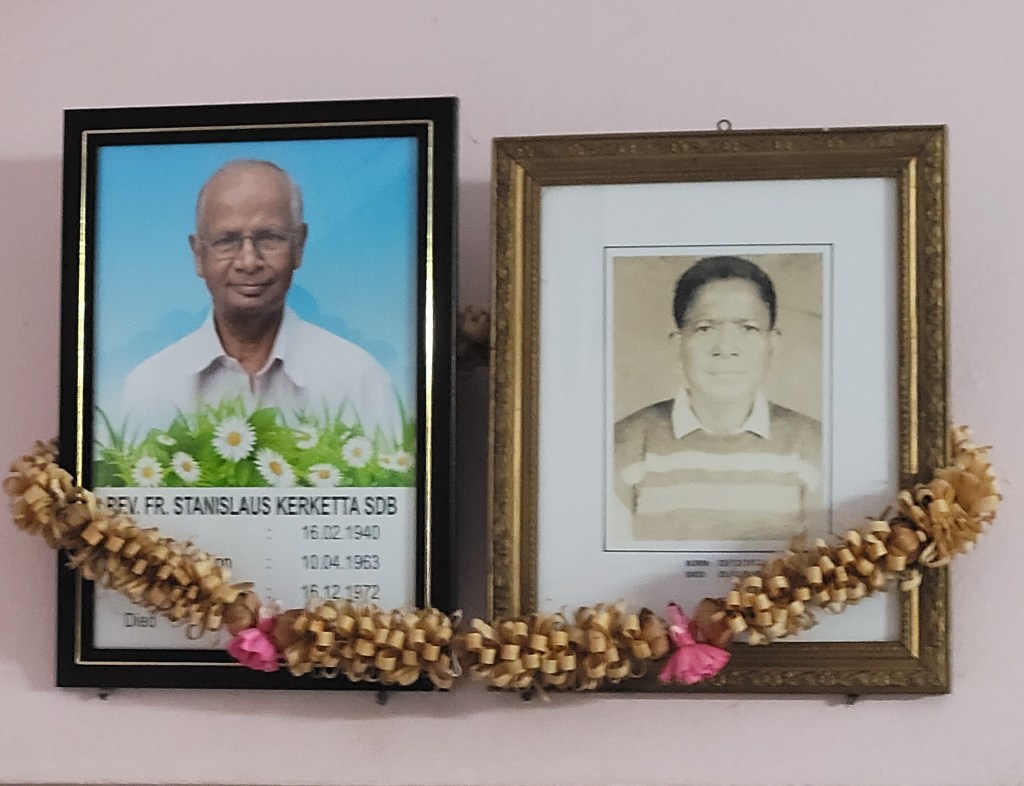
Late Reverend Father Stanislaus Kerketta, sdb (Left; My paternal granduncle),

Late Louis Kerketta (Right; My paternal grandfather)

Trigger warning: death, stroke

I only have faint memories of my paternal grandfather. He passed away when I was a little boy. I remember sitting down together in an evening around a bonfire. Although I do not have more memories of my grandpa (Nana, as I would call him; instead of Dadaji, the accurate Hindi term), I came to know a lot about him through my dad, uncles and aunts. My ‘nana’ was a Hindi teacher at a school, not far away from their house. Apparently he was quite popular as he was respected and loved as a teacher. When I studied the Hindi language in school, I would often refer to a Hindi dictionary that he left behind. It was quite useful and helped me a great deal.
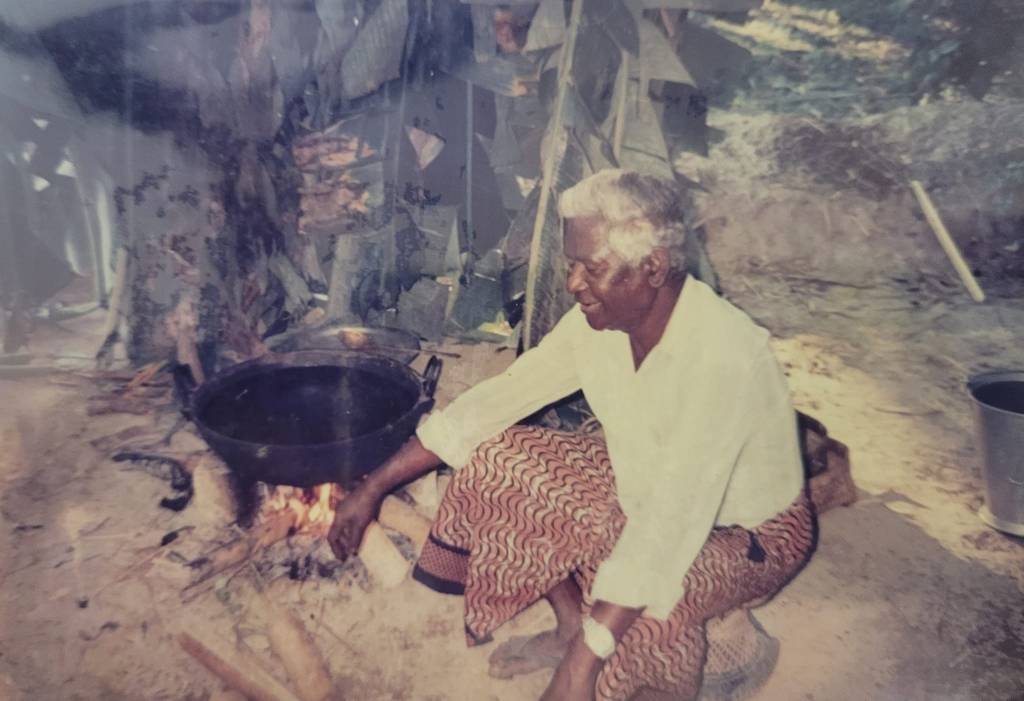
My nana apparently was a kind and loving person. He was quite social. Although he had been a Sarna dharma (Nature worship religion) priest, he was a practicing and faithful Roman Catholic after wilful conversion. My grandma, and relatives after them continue to be practicing faithful. Nana’s untimely death was a bit of a mystery. He had gone to the loo post midnight and was found passed away later with his watch stopped at 2:30 am. My dad preserved the watch in my nana’s memory.

There’s this funny thing my dad told me as a child, to console me whenever there was a thunderstorm and I would get a bit scared, “Tumar nana’e football khelise,” which translated from Assamese into “Your grandfather is playing football.” That would work like a charm in calming me down.

My paternal granduncle, whom I called ‘Father nana’ lived a ‘full’ life. I called him so because he was a Catholic priest. Father nana, or just nana, was a simple, yet hard-working person. He was quite dedicated to his priestly life and also loved my sister and me dearly. He filled any void my sister and I might have otherwise had after the loss of our grandfather. He would get chocolates for us. I remember asking him for a Five-rupee tasty digestive treat once, while going on an evening stroll together. Although he was a Salesian priest and swore an oath of poverty, he did not hesitate to buy one for me. It was only much later that I came to know of the Salesian oaths made at the time of a Catholic priest’s ordination. Nana would be keen on overseeing the vegetation that grew on the Salesian establishments he was posted in, look after the seminarian boys, go to many rural areas to celebrate Mass among other things.

I remember the time when he was posted in Tinsukia. My sister and I would go visit him during summer vacations. He would crack many jokes. Nana had false teeth that he would remove and show us, which amused us a lot. He would let us type letters or simply write on his mechanical typewriter now and then. I would also read a few publications of the Salesians of Don Bosco during the vacations.
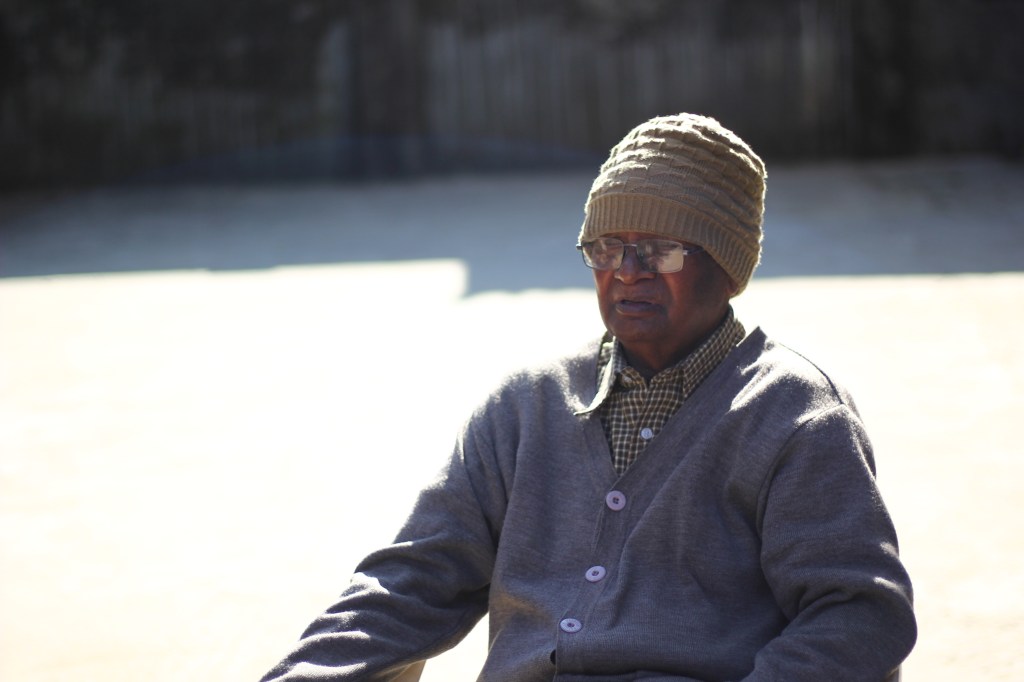
Father Nana’s immediate family lived in Jamuguri. Towards the end of his service, he was at Don Bosco Salesian house, Dibrugarh. He would visit us from time to time. We would go visit him too. He was healthy for the greater part of his life. Having a stroke during the last days of his life might have been upsetting as he was otherwise quite an active person, despite being a diabetic. The priests and brothers at the Salesian house took care of him. We also went to visit him; sometimes just mom and dad, sometimes me as well. I could see it in his eyes that he felt helpless. He found it difficult to speak because he was partially paralysed after the stroke. But I could also tell that he was satisfied that we had gone to visit him. He wanted to visit his family in Jamuguri, but the place was far away. He was not in a condition to travel and the Covid-19 pandemic still posed a threat. Later, nana contracted coronavirus and laid to rest in May 2021.

The love and life of both my grandfather and granduncle was something that many hold closely, both family and others, whose lives they touched. Thank you, dear nana’s.
Bonfire Tales: Adivasi stories

The man who could turn into a Lion

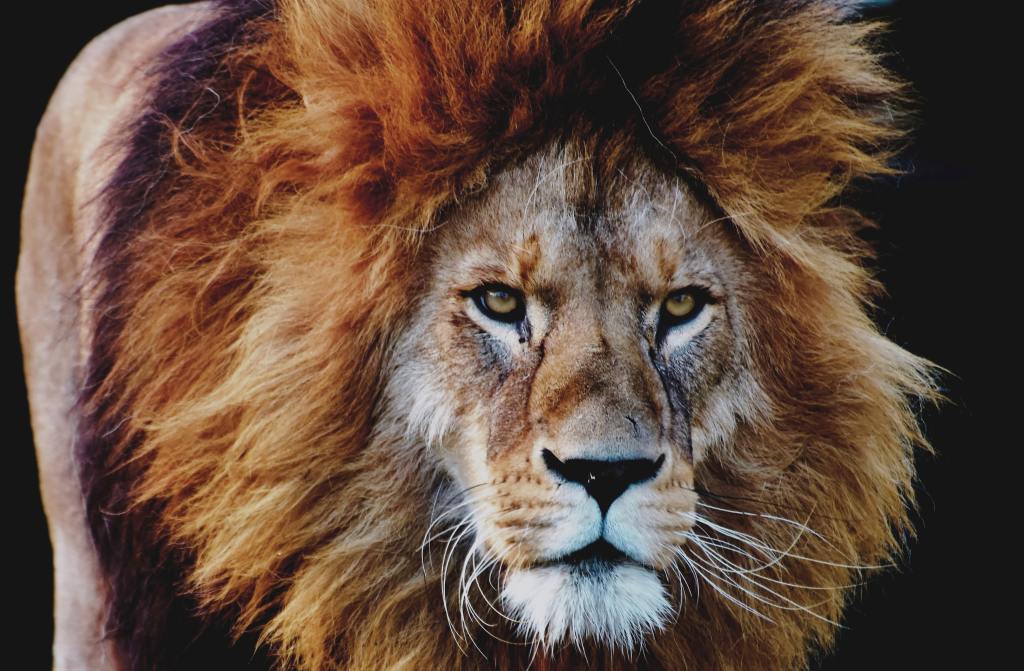
There once lived a man in a village predominantly occupied by Adivasi communities in India. He was among the rare Adivasis who knew how to turn into a Lion, temporarily. However, there was a major flaw in this transformation. Once he transformed into a lion, he would lose all human consciousness. He would destroy everything in his way, often posing a danger to others. It was said that he had also injured others after transforming. One fine day, when he transformed, something happened that he couldn’t forgive himself for. Without any memory or consciousness, his family met an end by his own hands (claws). That was when he abandoned transforming into a lion forever. He was strong and superhuman but had lost his family. He thought to himself, “What good is a supernatural ability if I cannot protect my own?”

Calling spirits

Occasionally, when their wives were away – sitting together, chatting, and smoking a local-made hookah, the elder men of the village would gather in a circle and decide on calling spirits and talking to them. Calling spirits was not an easy task. What made it more difficult was that sometimes the spirits were unfriendly. There was also a chance of being possessed. So before calling the spirit, the elders would have a bit of alcohol so that they become impure. Spirits do not enter impure bodies, they say. Then they would light a fire and do the necessary rituals to call a spirit. They would talk to the spirit that they called and once the spirit left, the fire would go out. These events were not free from risks and mishaps and eventually people considered that it is a better to stop it altogether.

The great betrayal

Once there lived a pious and kind priest. He had a shikha (knot hair) and wore a sacred thread. It was afternoon and a few guests came over. They were priests too. They had a shikha as well, but no thread. Also, they were fairer in complexion compared to the host, although both were from the same land. Both the host and the guests sat down to eat. The host’s wife served them the best rice, lentils, vegetables, and fruits. She also offered them curd with some jaggery. After everyone had eaten to their full, the host’s wife collected the plates for cleaning. The host priest and the guests proceeded to wash their hands by the pond. Before washing his hands, the host said a prayer and removed his sacred thread. After they had all washed hands, the guests took the host’s thread. Before the host could do anything, they fled.

My Lineage

Part 0 – Introduction

Often people ask me, “Are you a Tamilian or a Malayali?”

In my early days in school, students used to ask, “Are you a South Indian?”

But then I used to reply, “No, I’m from Assam.”

My classmates would get unsatisfied with this answer. Though when they listen to me speak fluent Assamese, they do believe it.

Part I – Paternal Lineage

I do not blame them. The inclusion of my community in Assam’s identity was ignored for several generations. In a few other states, people of my paternal lineage are recognized as Scheduled Tribes. We in Assam, on the other hand, are void of such perks. That doesn’t mean I wasn’t discriminated against, even in school. After all, many Indians have a narrow, stereotypical view of the Adivasi.

The ‘Adivasi’ as the name suggests are the first settlers (of any land, but in my case – India).

They have often been stereotyped as “primitive.” Well, obviously that isn’t the truth. I am a Kharia, specifically a Dudh Kharia, because my dad is one. On many occasions, I have heard him tell stories of my lineage. He would say, till my granddad, we were a clan of priests. No, not priests in cassocks. I’m talking about priests with the ‘Sacred thread’, clad in white or saffron, having topknot hair (Chon’ti).

Among the Adivasi, we were Pujaris (priests), which is the equivalent of a Hindu Brahmin.

My ancestors revered cows and had similar practices as that of Hindus. They also revered nature.

LR pic-290

(My paternal grandmother)

Part II – Maternal Lineage

My mother was born to a son with an Anglo-Indian father and a Naagvanshi Munda woman (Jharkhand). Her father had an English father and an Odia mother.

They were among the English-men who had settled in India during the British rule.

Part III – The Roman Catholic Church

Though my dad’s ancestors were Adivasi Priests, he was born into a Roman Catholic family. Are you wondering how? It’s simple. My paternal granddad was baptized into the Roman Catholic Church at his own will. So, both my paternal grandparents and my paternal uncles/aunties are Catholics. They do, however, respect the traditions of the Kharias.

My mother was also born into a Roman Catholic family, although initially, my granddad was Anglican.

Part IV – “Isn’t ‘Kerketta’ a surname from Jharkhand?”

Yes, Kerketta is a common surname in states like Jharkhand and Chhattisgarh. Kharias in Assam were originally from these states. But during the British rule, many Adivasis migrated from these states for various reasons. Some came for jobs whereas others liked the ambience in Assam and got settled.

Part V – Conclusion

Now you know my lineage. But that isn’t all I told you. I told you about Adivasi groups and their traditions. Permit me to say, if we were primitive, we wouldn’t be getting straight A’s in class at a recognized and formal Educational Institute, in an unbiased setting. I also informed you about the Adivasi who have migrated to a different state. You have also been narrated about how the Adivasi have been absorbed into the Roman Catholic Church. I have also mentioned briefly about Anglo-Indians.

But who am I in the end? I am an Indian who was born into a Roman Catholic family. We are a country of beautiful lineages and exquisite diversities. But then, why do we discriminate?

History decides our heritage, but not what we want to leave behind. Hence, even though I am proud (not arrogant) of my lineage, I identify myself with what I can do now in order to leave behind a heritage for not just my succeeding generations, but for all future generations of the world.