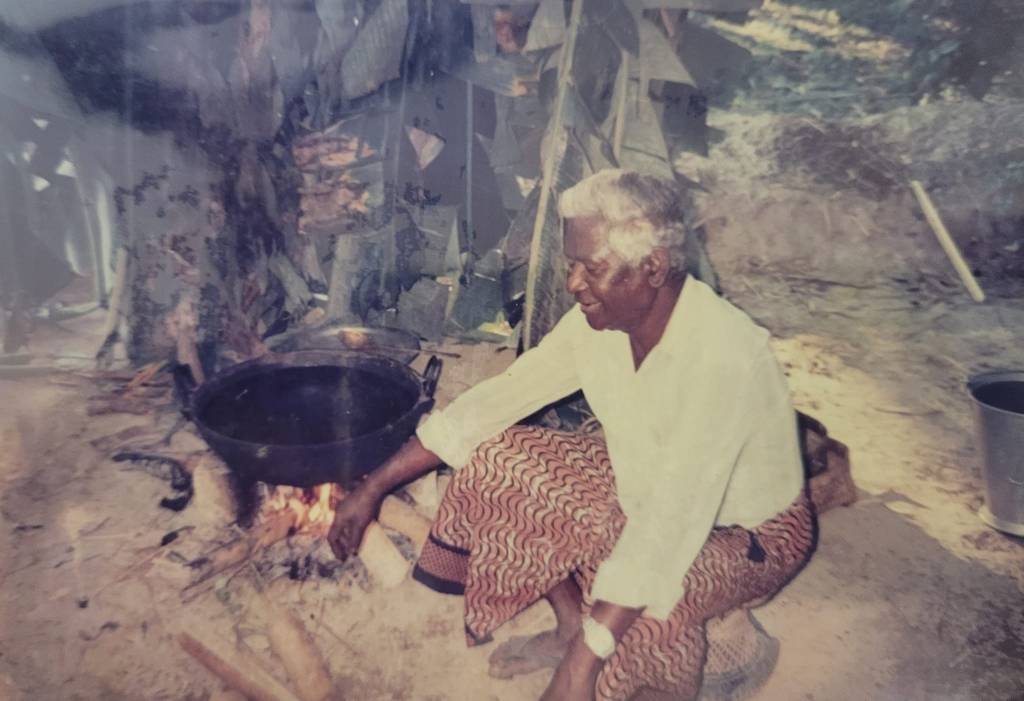
I don’t have a close relationship with my grandmothers as is found in many Indian households. My paternal grandmother spoke mostly Sadri and was shy to speak in Hindi even if she knew it. We didn’t speak much as I mostly spoke Assamese with my uncles and aunts. However, she is a hard-working yet calm lady. She used to cook meals with organically grown food in the semi-urban area that they were at. Whenever my uncles visited Guwahati from Dhekiajuli (Sonitpur), I would request them to bring some rice rotis prepared by my grandma. My dad had a transferable job. As long as he was in service, it was difficult moving about dogs. So we kept our dogs at our grandmother’s place. She was incredibly affectionate towards them.
My materal grandmother was a nurse who worked till superannuation. When my sister and I were little children, she used to get us candies and give us some money before leaving, back to Hatiali (Chabua) from Guwahati. Unlike my paternal grandmother, there were no language barriers with my maternal grandmother. Even then, we spoke less and only to the extent that was required.
What we have between our souls is like no other; No I don’t need to find another when I’ve found her. Even in our silences, the greatest stories are told As new pages in the story of life we unfold.
Badgered seems my words when we try to get close. Pardon me, but I’ve missed you too long. I bleed without bloodshed, I weep without tears; My heart is pierced without a spear.
I say that my red hearts are only for you As I would bleed my last drop to protect you; You, my love.
Forgive me dear beloved, I am a little old fashioned. I like suits rather than tattered jeans, I want to express my love for you in person Rather than a virtual language of ones and zeros. This distance, this time, this sacred geometry This excruciating worry
Is something I pray syncs to make us meet soon Like nature – imperfect and unequal, But always in equilibrium.
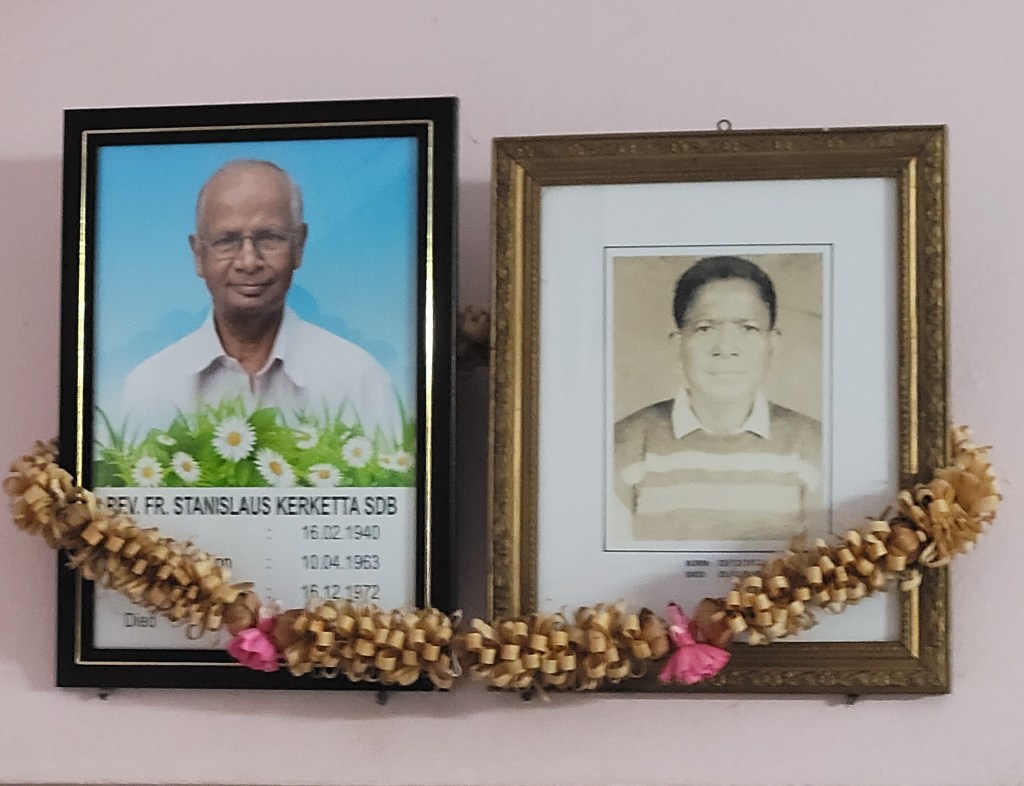
Late Reverend Father Stanislaus Kerketta, sdb (Left; My paternal granduncle),
Late Louis Kerketta (Right; My paternal grandfather)
Trigger warning: death, stroke
I only have faint memories of my paternal grandfather. He passed away when I was a little boy. I remember sitting down together in an evening around a bonfire. Although I do not have more memories of my grandpa (Nana, as I would call him; instead of Dadaji, the accurate Hindi term), I came to know a lot about him through my dad, uncles and aunts. My ‘nana’ was a Hindi teacher at a school, not far away from their house. Apparently he was quite popular as he was respected and loved as a teacher. When I studied the Hindi language in school, I would often refer to a Hindi dictionary that he left behind. It was quite useful and helped me a great deal.
My nana apparently was a kind and loving person. He was quite social. Although he had been a Sarna dharma (Nature worship religion) priest, he was a practicing and faithful Roman Catholic after wilful conversion. My grandma, and relatives after them continue to be practicing faithful. Nana’s untimely death was a bit of a mystery. He had gone to the loo post midnight and was found passed away later with his watch stopped at 2:30 am. My dad preserved the watch in my nana’s memory.
There’s this funny thing my dad told me as a child, to console me whenever there was a thunderstorm and I would get a bit scared, “Tumar nana’e football khelise,” which translated from Assamese into “Your grandfather is playing football.” That would work like a charm in calming me down.
My paternal granduncle, whom I called ‘Father nana’ lived a ‘full’ life. I called him so because he was a Catholic priest. Father nana, or just nana, was a simple, yet hard-working person. He was quite dedicated to his priestly life and also loved my sister and me dearly. He filled any void my sister and I might have otherwise had after the loss of our grandfather. He would get chocolates for us. I remember asking him for a Five-rupee tasty digestive treat once, while going on an evening stroll together. Although he was a Salesian priest and swore an oath of poverty, he did not hesitate to buy one for me. It was only much later that I came to know of the Salesian oaths made at the time of a Catholic priest’s ordination. Nana would be keen on overseeing the vegetation that grew on the Salesian establishments he was posted in, look after the seminarian boys, go to many rural areas to celebrate Mass among other things.
I remember the time when he was posted in Tinsukia. My sister and I would go visit him during summer vacations. He would crack many jokes. Nana had false teeth that he would remove and show us, which amused us a lot. He would let us type letters or simply write on his mechanical typewriter now and then. I would also read a few publications of the Salesians of Don Bosco during the vacations.
Father Nana’s immediate family lived in Jamuguri. Towards the end of his service, he was at Don Bosco Salesian house, Dibrugarh. He would visit us from time to time. We would go visit him too. He was healthy for the greater part of his life. Having a stroke during the last days of his life might have been upsetting as he was otherwise quite an active person, despite being a diabetic. The priests and brothers at the Salesian house took care of him. We also went to visit him; sometimes just mom and dad, sometimes me as well. I could see it in his eyes that he felt helpless. He found it difficult to speak because he was partially paralysed after the stroke. But I could also tell that he was satisfied that we had gone to visit him. He wanted to visit his family in Jamuguri, but the place was far away. He was not in a condition to travel and the Covid-19 pandemic still posed a threat. Later, nana contracted coronavirus and laid to rest in May 2021.
The love and life of both my grandfather and granduncle was something that many hold closely, both family and others, whose lives they touched. Thank you, dear nana’s.
Over the years, I have realised that one can learn a lot even from a grain of sand. There are a few realisations that I have penned down:
1. Conquer with love, not with authority. It’s good to be a survivor only if you have something to get back to.
2. Humility, dedication and passion is the passenger ticket to a rocket to your goals.
3. People fight for you, Against you Or over you. That is the price of popularity.
4. It takes great courage to defeat one’s own ego and remain human.
5. Take something that annoys you and learn something useful from it.
6. Do good. Be good. Get good.
7. Personalize your life.
8. Pay attention to detail, but do not let lost in it.
9. When you write a song, write the words your heart is shouting out to you for attention.
10. A Leader is a person who raises everyone with him/her as he/she rises.
11. Be a message, not a messenger.
12. Let’s learn from nature. Nothing’s perfect, but everything is in equilibrium.
13. Restrictions kill Creativity.
14. Failures don’t matter if you start moving your focus towards success.
15. Don’t do anything for the sake of doing it. Do it only if it’s relevant.
16. Be proud enough to have standards, humble enough to learn.
17. Save your seconds. (time)
18. Don’t belong to anything. Let things belong to you.
19. Meet the expectations you have from yourself and everything else will follow.
20. Live like a poor person. Think like a rich person. The mindset is what leads you to do great things.
21. Time is movement. Keep moving.
22. Nothing is big enough for arrogance. Nothing is small enough for gratitude.
23. We often do things that we wouldn’t normally do when we are at the peak of emotion – excited, enraged, sorrowed. Strangely, it is the things we do at these moments that make the most memorable differences in our lives.
25. The greatest enemy of anything good, to become great, is lack of patience.
26. If someone wrongs you, do not wrong them back. Move on and focus on your goals. Achieve such a pedestal in life that their wrong would become insignificant.
27. Never reveal your plans before they have been materialised.
28. Don’t chase money. Do what you love, put your heart and soul into it. Money will chase you.
29. As long as you are humble, you will always keep learning. Learning more will increase your ability to grow in all spheres.
30. Whoever thinks money is wealth is already poor.
31. The only things that are good or bad are intentions and outcomes. Whatever happens in between is irrelevant.
32. You don’t get gold on the earth surface. You gotta dig deep. If you judge a person too quickly, you not know what they are worth.
33. If you want to be friends with two people who are enemies, you will ultimately lose both.
34. There are only two realities where matter exists – Time and space. Everything else is either spiritual or fiction.
35. Fight against adversities, not adversaries.
36. We are all part of the same species, some of us are from the same bloodline and even maybe the same family. What unites or separates us is who we choose to be from within.
37. When others look up at you for inspiration, every breath becomes a resonsibility.
38. Telling people what they want to hear might make you popular, but won’t get you any real friends.
39. Then fate said, “I have no past. present or future. But all pas, present and future depends on me.
40. Is a career just something to fill our pockets? Can’t it be a seamless, flawless journey?
41. Presence in the present is more important than presents.
This is a question the young ‘eligible’ unmarried adults get asked once they cross a ‘certain’ age (at least in India). This question has been around for generations and never seems to get old. Most times they’re awkward, maybe sometimes they leave the young adults in abashment. Although they could often be annoying, with an evident unsolicited match-making intent.
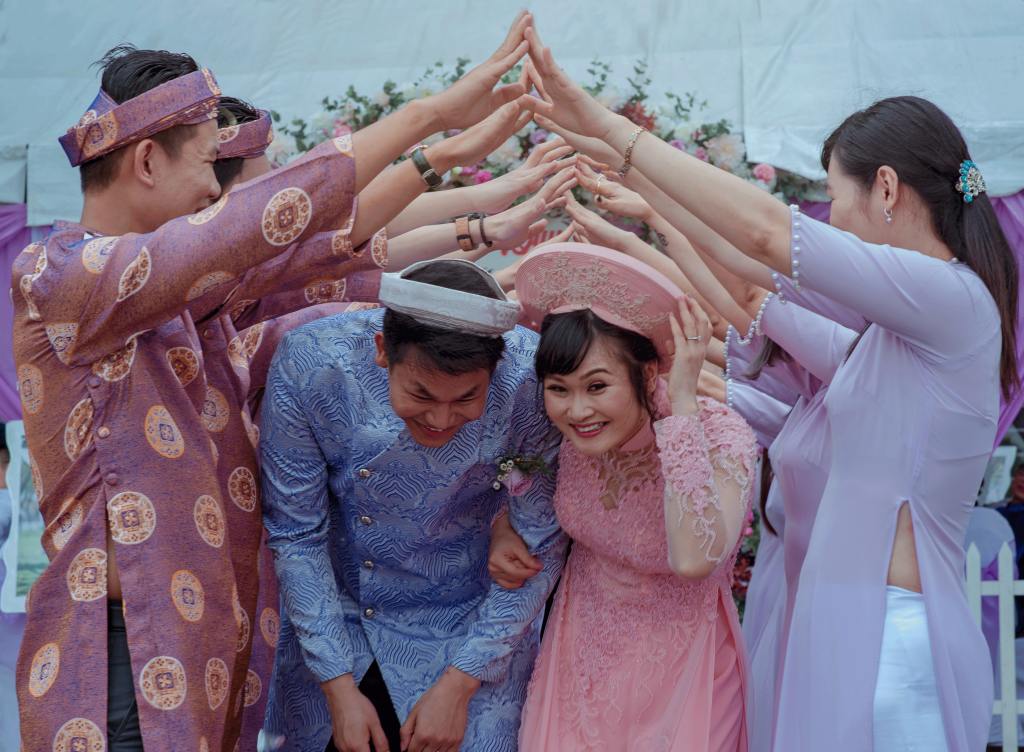
Although the definition of marriage has remained the same, its meaning over time has changed. In the Indian context for example, categorizing marriages are ‘love marriage’ or ‘arranged marriage’ seems like a narrow perception if we go by the definition and history of love marriages and arranged marriages in India. An arranged marriage follows a process of marriage where there is match-matching by relatives, friends, acquaintances of the parents of the groom/bride, matrimonial guides, sites or priests. After the bride and groom meet, there is a courtship period. In the case of Hindus, horoscopes (and caste) are matched and considered crucial. Love marriages are ones where two consenting adults fall in ‘love’ and decide to get married.
Although the concept of a ‘love’ marriage seems pretty straight-forward, historically it was looked down upon in India and in some cases not allowed by the family and even considered dishonourable. This still exists in some regions of India. Eloping became common in love marriages at a point of time.
But what is marriage without love? Yes, one can fall with their spouse after marriage. Yes, couple united by ‘love marriages’ get separated too. The reverse is true as well, where love marriages last forever and arranged marriages break, even if they don’t on paper. Divorces weren’t prevalent in India. A marriage was considered sacred and still is. Divorces have been rising lately though, not because it is a legal agreement. But because of various genuine reasons as well.
Returning to the question of “When are you getting married,” there are many underlying aspects related to the decision behind this response, if one chooses to respond honestly that is. The most common honest response could be, “I don’t know” or “I’m not sure.” Marriage is a union. Yes, it is a union of two families. But most importantly it is the union of two individual souls who decide to become one, through constant companionship, surrendering and love. It is a promise of mutual strengthing and support.
So each person needs time and space to introspect on the aspects related to the decision of marriage. Personal mental and financial confidance is extremely relevant before saying “I do” for another. One’s career and one’s understanding should align and/or compliment with the future spouse’s ambitions for a sucessful marriage. Most importantly, one must be able and willing to submit themselves completely to the union of marriage through independently conscious, mutual consent.
Today, young adults including myself, are faced with a plethora of realities, experiences (probably not long, but profound) and global cultures and tradition. The meaning of ‘love’ too keeps getting redefined, learned, unlearned an re-learned. There are women whom men are attracted to but have no emotion for. There is also the case where they love a woman like no one else and maybe even find attractive but not in a sexual way. There could also be women who give their heart and soul to a person they believe is their soulmate. But then again, broken hearts of women could sometimes even be blinded by the wounds of past hurt that they can even believe that a virtuous man is in fact approaching them only to take advantage of them. It isn’t the fault of anyone. We can’t read minds, can we?
They say marriages are made in heaven, but there are everyday humans who aren’t legally allowed to get married in some countries despite living a life filled with love and companionship despite countless hardships. #pride
Now when I think about the quesion of “When are you getting married?” … I think, are they ready for the response? Can they understand the underlying realities associated with that question? In a world of changing realities, uncertain economies and information explosions that affect and form our minds; in a time of growing anxieties from tasks that shouldn’t naturally cause such, it is not always a simple answer. It sure is never easy. To understand the language of the heart, ones needs to listen to the heart amidst the noise of the new conditions of life we live in.
Q: “When are you getting married?” A: Fate will lead me to mutual love. Mutual love will lead me to marriage. All else will abide by this fate.




 Ishan Savio