On a grandfather and a grandfather figure

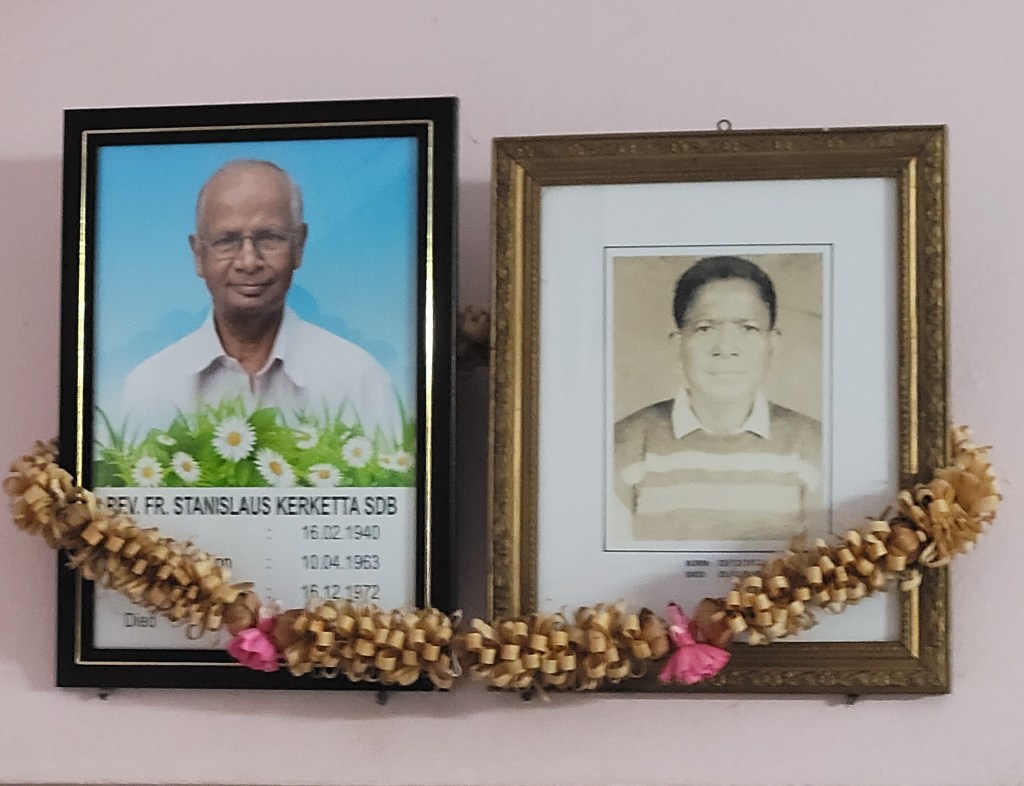
Late Reverend Father Stanislaus Kerketta, sdb (Left; My paternal granduncle),

Late Louis Kerketta (Right; My paternal grandfather)

Trigger warning: death, stroke

I only have faint memories of my paternal grandfather. He passed away when I was a little boy. I remember sitting down together in an evening around a bonfire. Although I do not have more memories of my grandpa (Nana, as I would call him; instead of Dadaji, the accurate Hindi term), I came to know a lot about him through my dad, uncles and aunts. My ‘nana’ was a Hindi teacher at a school, not far away from their house. Apparently he was quite popular as he was respected and loved as a teacher. When I studied the Hindi language in school, I would often refer to a Hindi dictionary that he left behind. It was quite useful and helped me a great deal.
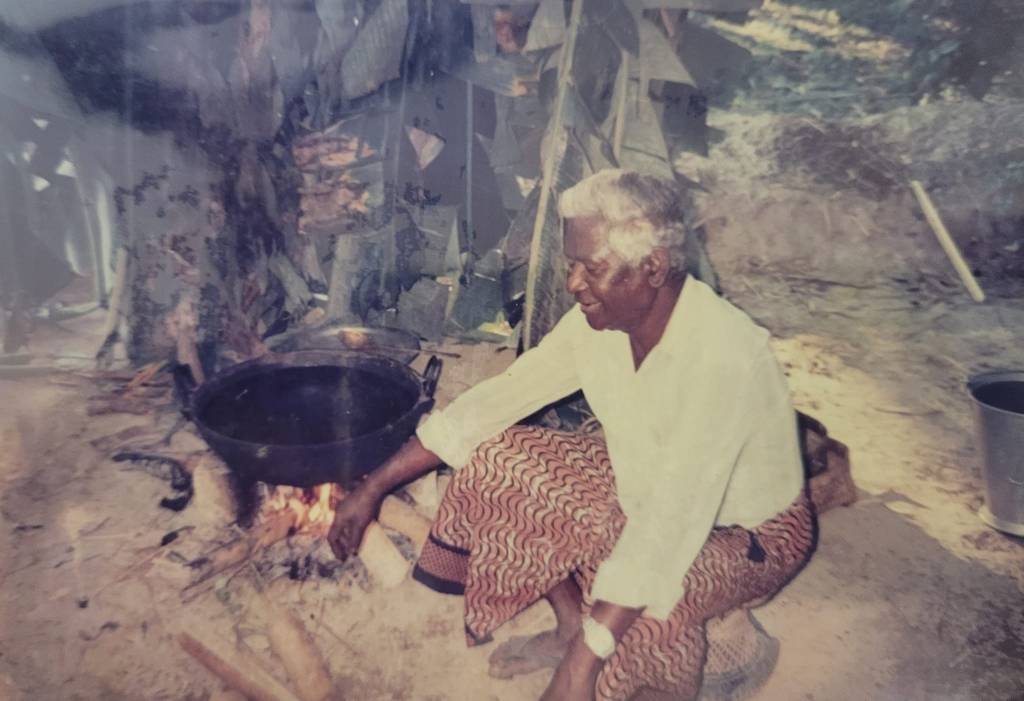
My nana apparently was a kind and loving person. He was quite social. Although he had been a Sarna dharma (Nature worship religion) priest, he was a practicing and faithful Roman Catholic after wilful conversion. My grandma, and relatives after them continue to be practicing faithful. Nana’s untimely death was a bit of a mystery. He had gone to the loo post midnight and was found passed away later with his watch stopped at 2:30 am. My dad preserved the watch in my nana’s memory.

There’s this funny thing my dad told me as a child, to console me whenever there was a thunderstorm and I would get a bit scared, “Tumar nana’e football khelise,” which translated from Assamese into “Your grandfather is playing football.” That would work like a charm in calming me down.

My paternal granduncle, whom I called ‘Father nana’ lived a ‘full’ life. I called him so because he was a Catholic priest. Father nana, or just nana, was a simple, yet hard-working person. He was quite dedicated to his priestly life and also loved my sister and me dearly. He filled any void my sister and I might have otherwise had after the loss of our grandfather. He would get chocolates for us. I remember asking him for a Five-rupee tasty digestive treat once, while going on an evening stroll together. Although he was a Salesian priest and swore an oath of poverty, he did not hesitate to buy one for me. It was only much later that I came to know of the Salesian oaths made at the time of a Catholic priest’s ordination. Nana would be keen on overseeing the vegetation that grew on the Salesian establishments he was posted in, look after the seminarian boys, go to many rural areas to celebrate Mass among other things.

I remember the time when he was posted in Tinsukia. My sister and I would go visit him during summer vacations. He would crack many jokes. Nana had false teeth that he would remove and show us, which amused us a lot. He would let us type letters or simply write on his mechanical typewriter now and then. I would also read a few publications of the Salesians of Don Bosco during the vacations.
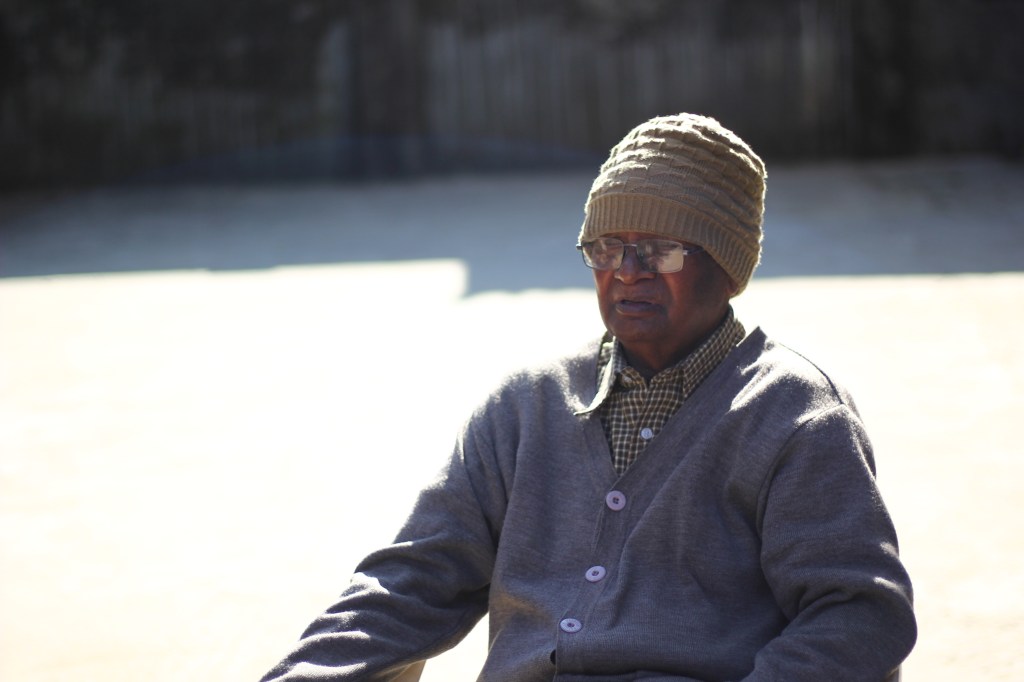
Father Nana’s immediate family lived in Jamuguri. Towards the end of his service, he was at Don Bosco Salesian house, Dibrugarh. He would visit us from time to time. We would go visit him too. He was healthy for the greater part of his life. Having a stroke during the last days of his life might have been upsetting as he was otherwise quite an active person, despite being a diabetic. The priests and brothers at the Salesian house took care of him. We also went to visit him; sometimes just mom and dad, sometimes me as well. I could see it in his eyes that he felt helpless. He found it difficult to speak because he was partially paralysed after the stroke. But I could also tell that he was satisfied that we had gone to visit him. He wanted to visit his family in Jamuguri, but the place was far away. He was not in a condition to travel and the Covid-19 pandemic still posed a threat. Later, nana contracted coronavirus and laid to rest in May 2021.

The love and life of both my grandfather and granduncle was something that many hold closely, both family and others, whose lives they touched. Thank you, dear nana’s.

1000 mg

Trigger warning: medicines, mental health

Imagine having to take artificial mind altering (although medically prescribed) drugs every day for 16 years. Well, actually don’t. You won’t know how unless you have.

Taking an aspirin for a headache is a common thing we might do. Sometimes we fall ill and take medicines for a week or two. There are some chronic illnesses though that need to be continuously treated for maintaining health. These illnesses can be physical or mental. Most of us might be aware of the regular precautions of diabetes patients, blood pressure patients, heart patients and so on. These are the physical chronic illnesses that one face usually later on in life, but you never know.

The other category of chronic illnesses is mental illness. Yes, there are mental illness that aren’t chronic and easily curable. There are also mental disabilities, which is entirely different. But there are also mental chronic illnesses like severe depression, anxiety, personality disorders and mood disorders. Depending on the degree of severity, these are treatable but not curable.

So as treatment, a patient of one of these also has to take medication at some point, depending on severity. The medication is usually a daily affair. But there’s also one important caution. The patient cannot miss a dosage, else there are serious implications later. These medicines could be anti-depressants, mood stabilizers or other inhibitors and so on. These medicines affect the brain directly and keeps it at check from releasing access chemicals or too less of it, for example.

Medicines in Psychiatry are usually heavy at first and then tapered down over long periods of time, which is months to years (again depending on severity).

The story of ‘mg’ (milligram)

When you’re taking meds for a mental illness and you’re a patient; let’s say the doctor prescribes you 20 mg of a particular medicine for treatment. Over the course of treatment, the dosage is tapered down…6 months…15 mg….1 yr… You look at your doctor with desperate eyes. But he replies, “Continue 15 mg for another 6 months.” That’s how it goes on. 15 becomes 10, 10 becomes 5, 5 becomes 2.5, 2.5 becomes 1 mg. It doesn’t stop there. 1 mg also becomes 0.5 mg. That’s like a precautionary dosage for depression.

But if you have a bipolar disorder, you are eventually put on mood stabilizers, which are nothing but tablets. But the quantity of composition is greater. 250mg or 500mg of, say, Sodium Valproate. This might put a pressure on the liver. So, the doctor regulates the dosage after some trials and blood tests. You probably should consider it a right time to cut off alcohol. Anyway, when you’re on medication, you do need to avoid alcohol, smoking, recreational drugs and sleeping late.

Also, severity of the illness is always something to look at. The doctor can also prescribe 1 g (gram) or “1000 mg.” Sounds like a bit number for daily medication, right?

But this medication (mood stabilizer) prevents a patient from having a major depression or manic episode. Now that’s a bullet dodged. I’d go without meds any day if you give me an option. I mean, who doesn’t? But the consequences of not having it when it is required is far worse than having to, almost religiously, follow the restrictions and take the medications daily until (maybe) one day when you no longer need them.

(Here’s a big hug to everyone out there trying to making it through 🤗 and kudos to those managing so well. 🏆)

The Bipolar Bear

This is a story about mental health.

There was once a happy little boy in India. He wasn’t known to be very playful. But he did play for fun. As he grew, there was a time when his family had to move to another city. But he didn’t want to leave this city that he was fond of and the friends he made behind. It made him quite sad and he couldn’t accept it.

His new school in this city was quite different from his previous school too. Let’s say, it was out of his comfort zone. There were kids he came across, who behaved very differently compared to kids he had met before. Although all this was new and difficult to take in, he did realize later in life that the experience did teach him a lot.

In his final year of high school graduation, he was down with depression. But he wasn’t a kid that gives up. He knew that he had two choices – to consult a doctor and go for treatment or to prepare for his upcoming exams and deal with this later. Mental health was a taboo in India and still is in most regions of the country. Also, the boy didn’t want to lose an academic year before even finishing high school. No matter the reason, this was looked down upon. So, you guessed it right – he decided to make the latter choice; prepare for exams and deal with his health later.

The boy was able to study, but complained about unbearable headaches as the exams grew closer. He did okay in his exams, but collapsed right after. He was rushed to a doctor the day he collapsed and prescribed medication. He lay in bed for days. He had lost his appetite and desire to do anything. He would sleep and wake up, still in bed, with no sense of time. He later had hallucinations as well. The boy became afraid and had almost lost the will to live. But then as he lay in bed, one day, he heard a voice inside his head, “This is not your time to die. Go live your life” – and he did. It was summer and his mother started making fresh watermelon juice. This was the first time he had something in days. He also listened to some Worship songs that his aunt shared with him and prayed. He felt better soon, but still had mild headaches.

Their family then moved to another city, a major city in the country. The kid would have loved this city, but he felt unprepared because of what he had just been through. So to resolve any unfinished business, the kid’s parents took him, with hopeful intentions, to a psychiatrist in the city. But the boy was put under heavy medication and that itself caused an overdose and several side effects including hallucinations and losing consciousness.

The family then moved back to the city that the kid was fond of. He was admitted to a hospital there and treated. The initial procedure of treatment was to discharge the unnecessary medication that was given to the boy. After that, the boy consulted a psychiatrist on a regular basis. He is prescribed medicine, the next appointment is scheduled and after several appointments, the dosage is reduced.

The boy liked studying subjects like English Literature and Science. He was pretty good at math. But after depression, he had trouble solving advanced mathematical problems and also reading a book for too long. Anyway, he joined senior high school with Science subjects. But he joined after more than half the academic year was over. So naturally, half the lessons were also over. He couldn’t cope up, dropped that year and rejoined the next year but with Commerce subjects. Now, he wasn’t into commerce growing up, so that might have been a bad decision. But he did learn a lot of things which he felt he should know when he’s a grown up – like starting a company, types of companies, economics, banking, business, accounting and so on. Yes there was a shift from being among the top performers to an above average student, he did make some good friends along the way and also learnt a lot of new things.

He was soon in college in yet another beautiful city. College life was pretty swell too. He again shifted his stream so that he can learn more about Economics. He was among the top performers again. He completed his graduation and and stepped into post grads in Economics. It was around this time that a thought crossed his mind, “I want to be free and enjoy life like my friends. I don’t want to have medicines.”

He did feel good at first, but 6 months down the line, he had a manic episode. He was rushed to the hospital and had to be put to sleep with a tranquilizer syringe. Again there were a couple of medicines that were to be taken. He wasn’t clinically depressed anymore. He was clinically bipolar. BPAD (Bipolar Affective Disorder) was earlier termed as manic depression. It is essentially a mood disorder and a patient with bipolar disorder suffers a host of symptoms which differ when they are depressive or manic. It is a treatable, medically uncurable (so far) chronic illness. The boy, now a post-graduation student, finished his studies and took a break year for recovery. During the recovery year, he had gained a lot of weight, which is quite common in patients under psychiatric medication. Truth be told, he felt like a bear.

The following year he decided to upskill himself and the year after that, he started working. He left the job before he could complete a year. Since it was during the peak of Covid-19 pandemic, he couldn’t get another job. He had a minor manic episode.

He later returned to his hometown, where he was partly unemployed and partly self-employed. This went on till around a year and a half after which he got another job.

Being a patient of a mental health disorder is not easy and can happen to anyone. A person with bipolar disorder cannot work late at night as night’s sleep is crucial for them. So that would mean no late night parties and celebrations or music festivals that happen late into the night. Well, that’s only recreation. This also affects a person’s work life. Other than sleep, they are advised to avoid alcohol and any kind of drugs including cigarettes. Not following medical advise leads to severe headaches and probable chance of another episode.

Some common symtoms of bipolar disorder episodes are:

  • Severe headache
  • Anxiety
  • Restlessness
  • Overthinking
  • Pessimissim (depression)
  • Loss of appetite (depression)
  • Sleeplessness
  • Fatigue
  • Self-doubt (depression)
  • Foggy brain
  • Hallucinations
  • Suicidal thoughts
  • Increase in appetite (mania)
  • Over-spending (mania)
  • Easily agitated (mania)
  • Overflow of ideas (mania)
  • Over-confidence (mania)
  • Talking too quickly (mania)

Not just bipolar disorder, even depression, mania, borderline personality disorder and anxiety disorders and many other treatable mental health issues have restrictions for the patient. Often a smiling and healthy person, may be going through a lot. A little bit of kindness and understanding goes a long way.