I don’t have a close relationship with my grandmothers as is found in many Indian households. My paternal grandmother spoke mostly Sadri and was shy to speak in Hindi even if she knew it. We didn’t speak much as I mostly spoke Assamese with my uncles and aunts. However, she is a hard-working yet calm lady. She used to cook meals with organically grown food in the semi-urban area that they were at. Whenever my uncles visited Guwahati from Dhekiajuli (Sonitpur), I would request them to bring some rice rotis prepared by my grandma. My dad had a transferable job. As long as he was in service, it was difficult moving about dogs. So we kept our dogs at our grandmother’s place. She was incredibly affectionate towards them.
My materal grandmother was a nurse who worked till superannuation. When my sister and I were little children, she used to get us candies and give us some money before leaving, back to Hatiali (Chabua) from Guwahati. Unlike my paternal grandmother, there were no language barriers with my maternal grandmother. Even then, we spoke less and only to the extent that was required.
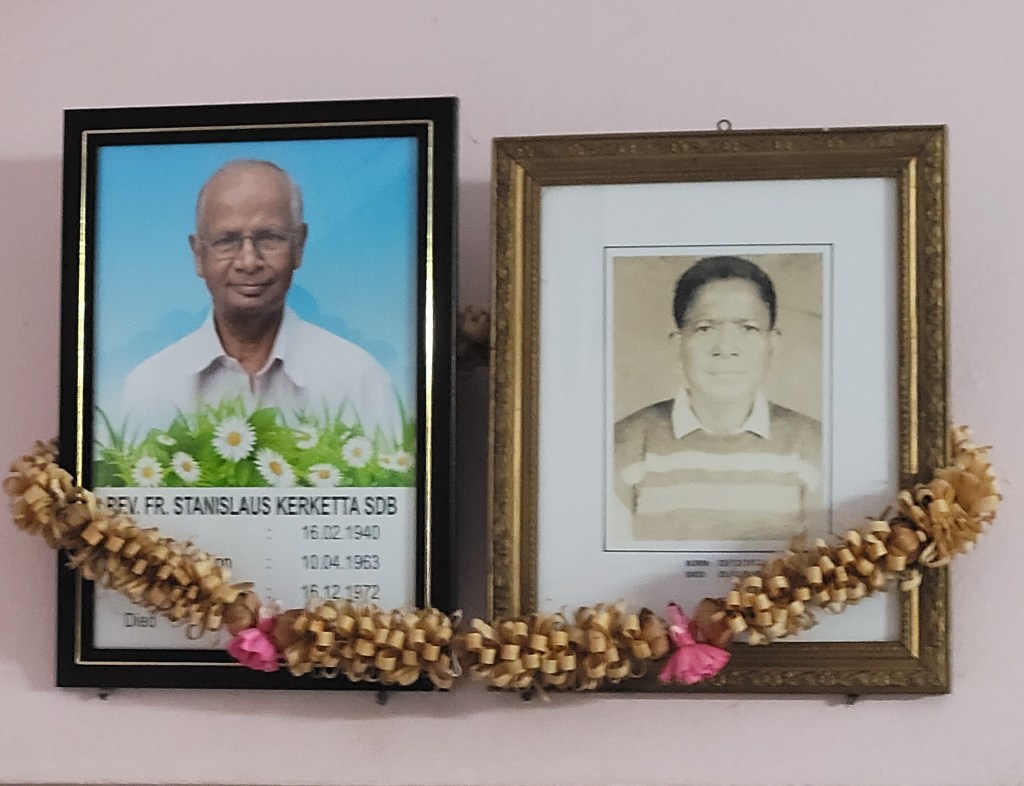
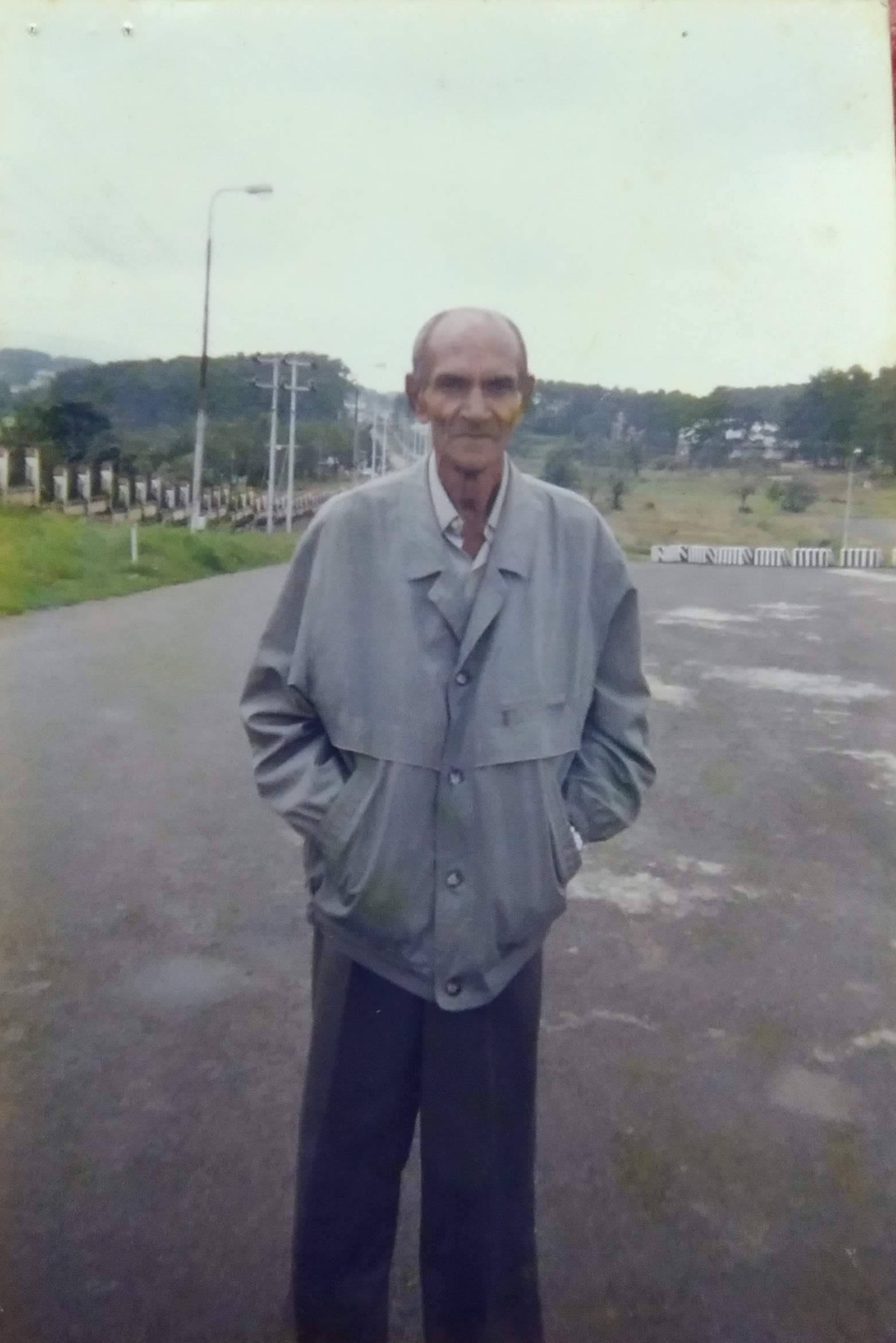
Late Reverend Father Stanislaus Kerketta, sdb (Left; My paternal granduncle),
Late Louis Kerketta (Right; My paternal grandfather)
Trigger warning: death, stroke
I only have faint memories of my paternal grandfather. He passed away when I was a little boy. I remember sitting down together in an evening around a bonfire. Although I do not have more memories of my grandpa (Nana, as I would call him; instead of Dadaji, the accurate Hindi term), I came to know a lot about him through my dad, uncles and aunts. My ‘nana’ was a Hindi teacher at a school, not far away from their house. Apparently he was quite popular as he was respected and loved as a teacher. When I studied the Hindi language in school, I would often refer to a Hindi dictionary that he left behind. It was quite useful and helped me a great deal.
My nana apparently was a kind and loving person. He was quite social. Although he had been a Sarna dharma (Nature worship religion) priest, he was a practicing and faithful Roman Catholic after wilful conversion. My grandma, and relatives after them continue to be practicing faithful. Nana’s untimely death was a bit of a mystery. He had gone to the loo post midnight and was found passed away later with his watch stopped at 2:30 am. My dad preserved the watch in my nana’s memory.
There’s this funny thing my dad told me as a child, to console me whenever there was a thunderstorm and I would get a bit scared, “Tumar nana’e football khelise,” which translated from Assamese into “Your grandfather is playing football.” That would work like a charm in calming me down.
My paternal granduncle, whom I called ‘Father nana’ lived a ‘full’ life. I called him so because he was a Catholic priest. Father nana, or just nana, was a simple, yet hard-working person. He was quite dedicated to his priestly life and also loved my sister and me dearly. He filled any void my sister and I might have otherwise had after the loss of our grandfather. He would get chocolates for us. I remember asking him for a Five-rupee tasty digestive treat once, while going on an evening stroll together. Although he was a Salesian priest and swore an oath of poverty, he did not hesitate to buy one for me. It was only much later that I came to know of the Salesian oaths made at the time of a Catholic priest’s ordination. Nana would be keen on overseeing the vegetation that grew on the Salesian establishments he was posted in, look after the seminarian boys, go to many rural areas to celebrate Mass among other things.
I remember the time when he was posted in Tinsukia. My sister and I would go visit him during summer vacations. He would crack many jokes. Nana had false teeth that he would remove and show us, which amused us a lot. He would let us type letters or simply write on his mechanical typewriter now and then. I would also read a few publications of the Salesians of Don Bosco during the vacations.
Father Nana’s immediate family lived in Jamuguri. Towards the end of his service, he was at Don Bosco Salesian house, Dibrugarh. He would visit us from time to time. We would go visit him too. He was healthy for the greater part of his life. Having a stroke during the last days of his life might have been upsetting as he was otherwise quite an active person, despite being a diabetic. The priests and brothers at the Salesian house took care of him. We also went to visit him; sometimes just mom and dad, sometimes me as well. I could see it in his eyes that he felt helpless. He found it difficult to speak because he was partially paralysed after the stroke. But I could also tell that he was satisfied that we had gone to visit him. He wanted to visit his family in Jamuguri, but the place was far away. He was not in a condition to travel and the Covid-19 pandemic still posed a threat. Later, nana contracted coronavirus and laid to rest in May 2021.
The love and life of both my grandfather and granduncle was something that many hold closely, both family and others, whose lives they touched. Thank you, dear nana’s.
My grandfather was a good story teller. He would ask me to sit down and express the story as it proceeded and even animate it to a great extent. I was a merely a child when he told be the story of the Tower of Babel. I only realised it when I was old enough to started going for Catechism classes in school.
With his deep voice, he modulated the narration and use the Lego blocks I was playing with to help me capture the story into my memory.
The story of the Tower of Babel (Genesis 11:1-9) in the Bible is as we know it, a story of the people desiring to build a tower so high that they could reach heaven, with a common belief that the heavens are in the sky. The people brought stone bricks and bitumen mortar and got to work.
My grandfather kept joining the Lego blocks and built a towerlike structure as he spoke. He said,”Then the people wanted wanted to buid the tower high and higher. Finally when they thought that they had almost reached, they fired and arrow to the sky.”
The people who worked to build the tower spoke and understood the same language. Then my grandfather continued, “Then God confused them by making them understand and speak different languages.”
The tower of babel remained incomplete and the people’s arrogance shattered.
The tower was incomplete, but the world got its many languages to spread across the earth and live everywhere, creating civilizations, cultures and stories thoughout history.
There once lived a man in a village predominantly occupied by Adivasi communities in India. He was among the rare Adivasis who knew how to turn into a Lion, temporarily. However, there was a major flaw in this transformation. Once he transformed into a lion, he would lose all human consciousness. He would destroy everything in his way, often posing a danger to others. It was said that he had also injured others after transforming. One fine day, when he transformed, something happened that he couldn’t forgive himself for. Without any memory or consciousness, his family met an end by his own hands (claws). That was when he abandoned transforming into a lion forever. He was strong and superhuman but had lost his family. He thought to himself, “What good is a supernatural ability if I cannot protect my own?”
Calling spirits
Occasionally, when their wives were away – sitting together, chatting, and smoking a local-made hookah, the elder men of the village would gather in a circle and decide on calling spirits and talking to them. Calling spirits was not an easy task. What made it more difficult was that sometimes the spirits were unfriendly. There was also a chance of being possessed. So before calling the spirit, the elders would have a bit of alcohol so that they become impure. Spirits do not enter impure bodies, they say. Then they would light a fire and do the necessary rituals to call a spirit. They would talk to the spirit that they called and once the spirit left, the fire would go out. These events were not free from risks and mishaps and eventually people considered that it is a better to stop it altogether.
The great betrayal
Once there lived a pious and kind priest. He had a shikha (knot hair) and wore a sacred thread. It was afternoon and a few guests came over. They were priests too. They had a shikha as well, but no thread. Also, they were fairer in complexion compared to the host, although both were from the same land. Both the host and the guests sat down to eat. The host’s wife served them the best rice, lentils, vegetables, and fruits. She also offered them curd with some jaggery. After everyone had eaten to their full, the host’s wife collected the plates for cleaning. The host priest and the guests proceeded to wash their hands by the pond. Before washing his hands, the host said a prayer and removed his sacred thread. After they had all washed hands, the guests took the host’s thread. Before the host could do anything, they fled.
I had been learning and playing the guitar since early 2005 at a comfortable age of 12. I’ve had three music instructors for guitar and music theory. I appeared for few guitar and music theory certifications as well, by Trinity Guild Hall (London) and joined an intermediate course much later by Nathaniel School of Music (Bangalore).
Although I picked up an instrument to learn at that age, I had been into singing earlier and even had an opportunity to get some basic vocal training in Hindustani Classical music. When I was in high school in 10th standard, I started writing songs and composed an instrumental track in 2009. I discussed it with a friend and we improved on it and another friend even added lyrics to it, but it never got materialised.
After my senior secondary (12th standard/PUC) exams, we got a 3-month break. I took decided to spend that time write lyrics and composing. I wrote several songs and wanted to make an album. But I also wanted to put my best songs forward and since the ‘project’ was independent and entirely self-funded (or let’s say parent funded), I decided to make an EP (Extended Play) rather than an LP (Long Play). An EP has 4-6 tracks as opposed to 12-13 tracks in LPs. It is based on track duration and its origin goes back to vinyl records.
I had made a musician friend in the city who was also a guitar, a brilliant one at that. One day, as we were chatting over ‘Messenger’ (Facebook, now Meta) and I told him about my project. Incidentally, he was planning to start a home studio and take up clients. So, we had a discussion at his place and decided to recorded five of my tracks.
Glad I got to be one of his first clients, I starting recording my compositions one by one. I used a software to convert music notations into audio and sent it to him to give him an idea of what I had in mind. We recorded the instruments. He suggested that he’d play and asked me to focus on the vocals. He played the guitar and piano sections of my compositions and added synth and other effects wherever required. The drums were programmed using a MIDI board. I sang for my first track ‘For Nothing.’ This song took the longest time to compose and is also the longest track in the EP, ‘Freedom of Emotions,’ but took only one take. Although we did record it multiple times for panning, variations, and other track requirements.
After the first track, I recorded a song dedicated to two of my close classmates who had accidental deaths. The next song was the title track, ‘Freedom of Emotions.’ I decided to work on this song with my friend, guitarist, and producer together. I had composed it with all the sections, melody, scale, chord progression and time signature and written the lyrics. He added variations in the guitar harmonics intro using layers and improved the strumming pattern and added a kickass guitar solo. The song had less lyrics and progressed quickly, so I gave him complete liberty with the section before the outro and the results were epic! Next, there was a track called ‘Break Free’ that his father really liked. Finally, we ended the EP with the only Hindi track in the EP, ‘Itni Sundar Tum Ho Kaise,’ which has the highest hits in the EP, followed by the title track. Like so, after mixing and mastering, in 2012 in the city of Guwahati, my music album was ready. The music in the tracks were played, mixed and mastered by Siddhant Das from Studio Dreamcather, Guwahati, which now stands closed.
Now as I was an 18-year-old with an independent music project in 2012, I didn’t want to go to any marketing agency. So, I decided to do it on my own, with absolutely no experience of marketing and promotions. Maybe taking up Commerce for 10+2 studies helped.
There were was no Spotify in India back then and online music distribution platforms weren’t quite active. I uploaded my tracks to platforms like SoundCloud and ReverbNation for streaming initially and shared the links to Facebook. I created and managed a Facebook Page and a YouTube Channel. I added my music to more platforms like MuSlate and SongDew. I also shared links to the songs and sometimes the tracks themselves with friends. I also availed the tracks for free downloads for a limited period. The responses were positive.
The album art that I used for ReverbNation was a simple a simple photograph from the balcony of an apartment flat that our family were living in as tenants in Uzan Bazar, Guwahati.
When I joined Undergrads that same year, I performed many times in college events and performed my tracks and newer compositions as well. During my PG studies, I was invited to take up independent sections of events for music. I also performed in open-mics in various locations in Bengaluru. I was also into photography. So, one evening when I was clicking photographs for a friend’s music gig, she asked me to perform 1 or 2 songs as well. The artist manager at the venue was really impressed by my performance and we got talking. He offered me a gig as well. But I unfortunately had to cancel it later, as I got busy with my dissertation at the University.
When Instagram launched and I started using an Android phone, instead of a Lumia phone, it was a great platform initially for sharing my photographs to it users Although Instagram has evolved to be a completely different platform today for creators, businesses, and all other users for various purposes. I also uploaded short video covers of popular songs on Instagram over time, performed some originals, used Instagram for promotions and even went live to perform.
I also wrote poems, articles and stories on WordPress. So I added a section to my music links there as well, for people to listen.
Much later, when Spotify was in India and other music streaming platforms like YouTube Music, Amazon Prime Music, JioSaavn were also getting popular, and I had some personal savings, I decided to distribute my music through online streaming platforms including Apple Music Store using cdBaby in 2020.
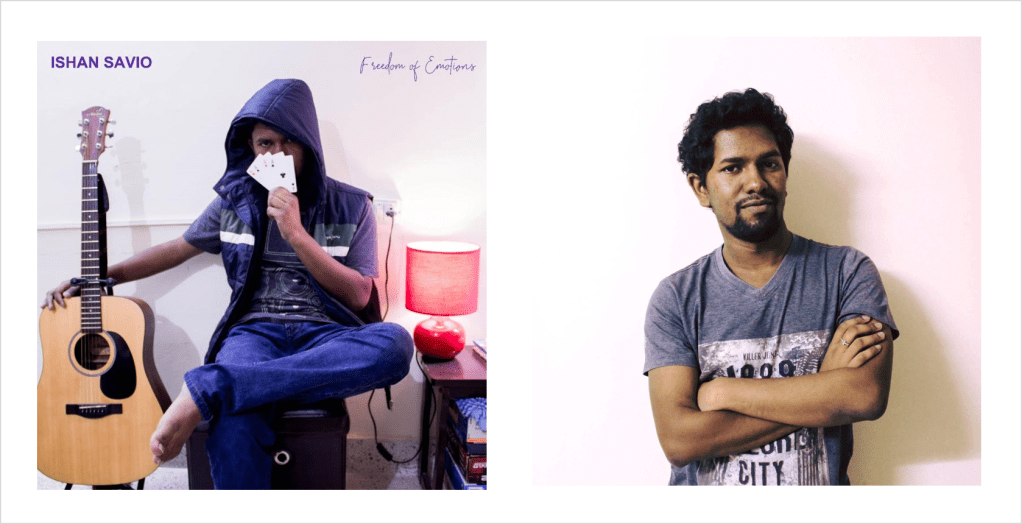
Album art (Left) and Artist Profile photo (Right)
There was no revenue for eligible withdrawal, but it did help get my music across to listeners much easier. The same year I also decided to get a personal keyboard for stress-busting, practicing music, learning keyboards, and improving my musicianship as a hobby.
Through this experience that started as a small project back by passion for a hobby, I learnt about one of the processes of getting your music out there and perform for music lovers. I learnt about branding, marketing, promotions, tax on intellectual property, international laws, socializing and communicating. I also learnt a bit of management, without a book. I learnt how to create an impact, remembering for whom musicians are really sing, playing and writing songs for – the people. I made many musician friends. We shared tracks, discussed music, supported each other, attended each other’s’ performances or concerts and sometimes even jammed or performed together.
Music is an expression. It relieves and entertains. It is created and even inspires creation.
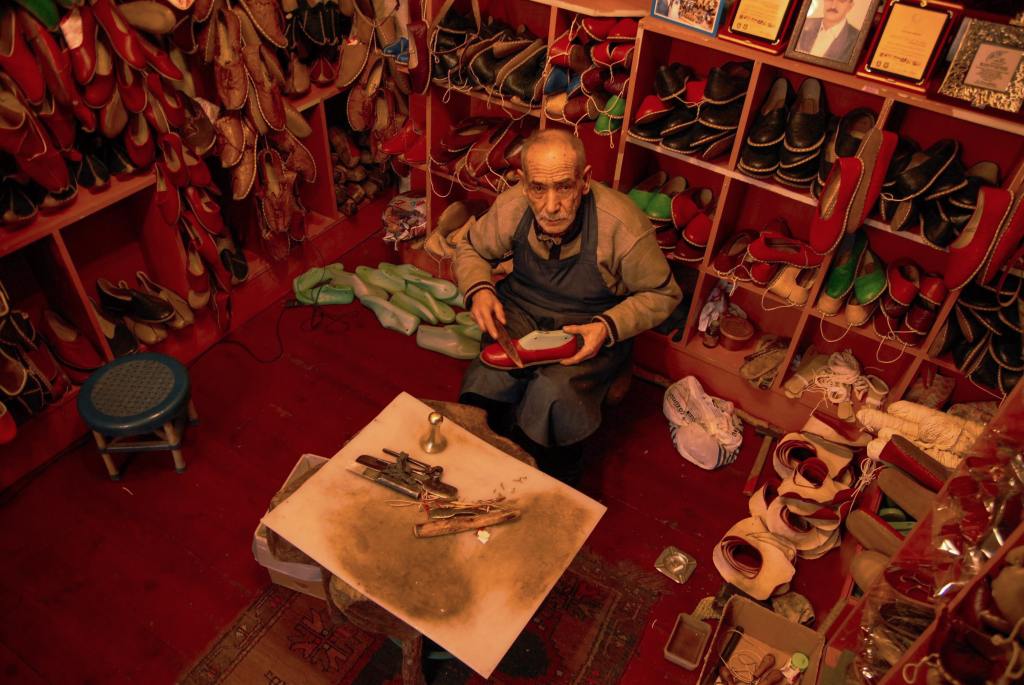
Once there was a cobbler who polished shoes at Rs. 5 per shoe. A wealthy man passed by and asked him to polish his shoes but said that he’d only pay Rs. 2.
The cobbler denied. The man said, “I’m going to pay only Rs. 2.” The cobbler replied, “I’m sorry that you are unable to afford my services. Please find someone else.”
The man was furious and felt humiliated. He yelled, “I am a rich businessman! How dare you say something like that?!”
The cobbler simply smiled and replied, “Sir, I do not deny that you are rich. I only say that you cannot afford my services as you cannot pay me the value equivalent to my services.”
The crowd stopped to look at the commotion. Realising that everyone around was looking at him, the man left. In seconds, everyone started getting their shoes polished from this cobbler. Indeed, his service was good. Some people even gave tips.
This may be a simple story, but it applies to most businesses and companies.
Imagine having to take artificial mind altering (although medically prescribed) drugs every day for 16 years. Well, actually don’t. You won’t know how unless you have.
Taking an aspirin for a headache is a common thing we might do. Sometimes we fall ill and take medicines for a week or two. There are some chronic illnesses though that need to be continuously treated for maintaining health. These illnesses can be physical or mental. Most of us might be aware of the regular precautions of diabetes patients, blood pressure patients, heart patients and so on. These are the physical chronic illnesses that one face usually later on in life, but you never know.
The other category of chronic illnesses is mental illness. Yes, there are mental illness that aren’t chronic and easily curable. There are also mental disabilities, which is entirely different. But there are also mental chronic illnesses like severe depression, anxiety, personality disorders and mood disorders. Depending on the degree of severity, these are treatable but not curable.
So as treatment, a patient of one of these also has to take medication at some point, depending on severity. The medication is usually a daily affair. But there’s also one important caution. The patient cannot miss a dosage, else there are serious implications later. These medicines could be anti-depressants, mood stabilizers or other inhibitors and so on. These medicines affect the brain directly and keeps it at check from releasing access chemicals or too less of it, for example.
Medicines in Psychiatry are usually heavy at first and then tapered down over long periods of time, which is months to years (again depending on severity).
The story of ‘mg’ (milligram)
When you’re taking meds for a mental illness and you’re a patient; let’s say the doctor prescribes you 20 mg of a particular medicine for treatment. Over the course of treatment, the dosage is tapered down…6 months…15 mg….1 yr… You look at your doctor with desperate eyes. But he replies, “Continue 15 mg for another 6 months.” That’s how it goes on. 15 becomes 10, 10 becomes 5, 5 becomes 2.5, 2.5 becomes 1 mg. It doesn’t stop there. 1 mg also becomes 0.5 mg. That’s like a precautionary dosage for depression.
But if you have a bipolar disorder, you are eventually put on mood stabilizers, which are nothing but tablets. But the quantity of composition is greater. 250mg or 500mg of, say, Sodium Valproate. This might put a pressure on the liver. So, the doctor regulates the dosage after some trials and blood tests. You probably should consider it a right time to cut off alcohol. Anyway, when you’re on medication, you do need to avoid alcohol, smoking, recreational drugs and sleeping late.
Also, severity of the illness is always something to look at. The doctor can also prescribe 1 g (gram) or “1000 mg.” Sounds like a bit number for daily medication, right?
But this medication (mood stabilizer) prevents a patient from having a major depression or manic episode. Now that’s a bullet dodged. I’d go without meds any day if you give me an option. I mean, who doesn’t? But the consequences ofnot having it when it is required is far worse than having to, almost religiously, follow the restrictions and take the medications daily until (maybe) one day when you no longer need them.
(Here’s a big hug to everyone out there trying to making it through 🤗 and kudos to those managing so well. 🏆)
There was once a happy little boy in India. He wasn’t known to be very playful. But he did play for fun. As he grew, there was a time when his family had to move to another city. But he didn’t want to leave this city that he was fond of and the friends he made behind. It made him quite sad and he couldn’t accept it.
His new school in this city was quite different from his previous school too. Let’s say, it was out of his comfort zone. There were kids he came across, who behaved very differently compared to kids he had met before. Although all this was new and difficult to take in, he did realize later in life that the experience did teach him a lot.
In his final year of high school graduation, he was down with depression. But he wasn’t a kid that gives up. He knew that he had two choices – to consult a doctor and go for treatment or to prepare for his upcoming exams and deal with this later. Mental health was a taboo in India and still is in most regions of the country. Also, the boy didn’t want to lose an academic year before even finishing high school. No matter the reason, this was looked down upon. So, you guessed it right – he decided to make the latter choice; prepare for exams and deal with his health later.
The boy was able to study, but complained about unbearable headaches as the exams grew closer. He did okay in his exams, but collapsed right after. He was rushed to a doctor the day he collapsed and prescribed medication. He lay in bed for days. He had lost his appetite and desire to do anything. He would sleep and wake up, still in bed, with no sense of time. He later had hallucinations as well. The boy became afraid and had almost lost the will to live. But then as he lay in bed, one day, he heard a voice inside his head, “This is not your time to die. Go live your life” – and he did. It was summer and his mother started making fresh watermelon juice. This was the first time he had something in days. He also listened to some Worship songs that his aunt shared with him and prayed. He felt better soon, but still had mild headaches.
Their family then moved to another city, a major city in the country. The kid would have loved this city, but he felt unprepared because of what he had just been through. So to resolve any unfinished business, the kid’s parents took him, with hopeful intentions, to a psychiatrist in the city. But the boy was put under heavy medication and that itself caused an overdose and several side effects including hallucinations and losing consciousness.
The family then moved back to the city that the kid was fond of. He was admitted to a hospital there and treated. The initial procedure of treatment was to discharge the unnecessary medication that was given to the boy. After that, the boy consulted a psychiatrist on a regular basis. He is prescribed medicine, the next appointment is scheduled and after several appointments, the dosage is reduced.
The boy liked studying subjects like English Literature and Science. He was pretty good at math. But after depression, he had trouble solving advanced mathematical problems and also reading a book for too long. Anyway, he joined senior high school with Science subjects. But he joined after more than half the academic year was over. So naturally, half the lessons were also over. He couldn’t cope up, dropped that year and rejoined the next year but with Commerce subjects. Now, he wasn’t into commerce growing up, so that might have been a bad decision. But he did learn a lot of things which he felt he should know when he’s a grown up – like starting a company, types of companies, economics, banking, business, accounting and so on. Yes there was a shift from being among the top performers to an above average student, he did make some good friends along the way and also learnt a lot of new things.
He was soon in college in yet another beautiful city. College life was pretty swell too. He again shifted his stream so that he can learn more about Economics. He was among the top performers again. He completed his graduation and and stepped into post grads in Economics. It was around this time that a thought crossed his mind, “I want to be free and enjoy life like my friends. I don’t want to have medicines.”
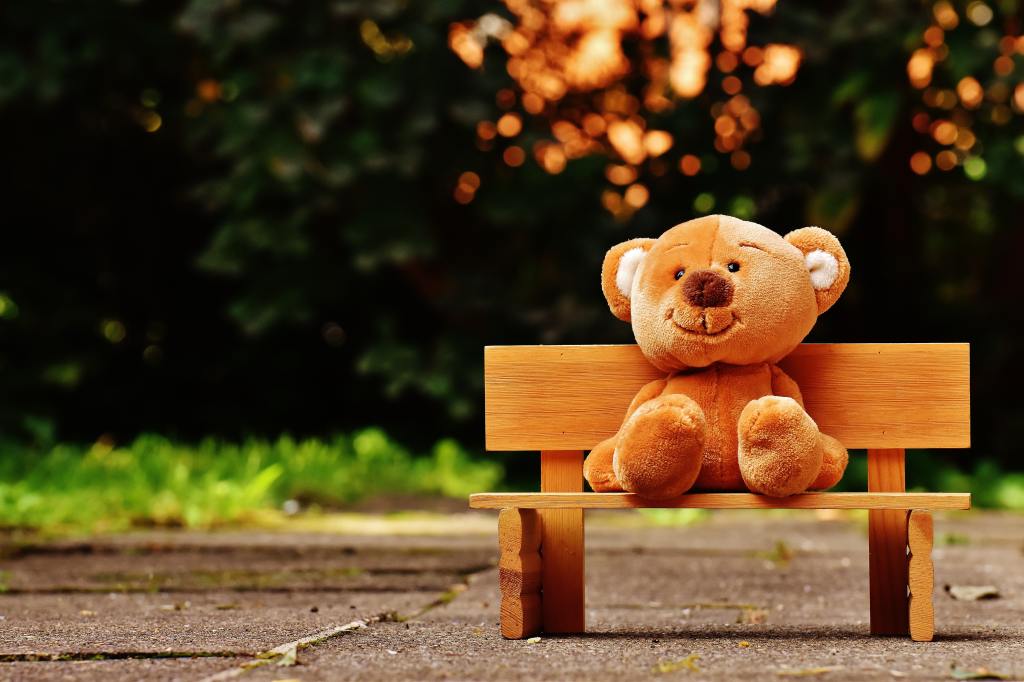
He did feel good at first, but 6 months down the line, he had a manic episode. He was rushed to the hospital and had to be put to sleep with a tranquilizer syringe. Again there were a couple of medicines that were to be taken. He wasn’t clinically depressed anymore. He was clinically bipolar. BPAD (Bipolar Affective Disorder) was earlier termed as manic depression. It is essentially a mood disorder and a patient with bipolar disorder suffers a host of symptoms which differ when they are depressive or manic. It is a treatable, medically uncurable (so far) chronic illness. The boy, now a post-graduation student, finished his studies and took a break year for recovery. During the recovery year, he had gained a lot of weight, which is quite common in patients under psychiatric medication. Truth be told, he felt like a bear.
The following year he decided to upskill himself and the year after that, he started working. He left the job before he could complete a year. Since it was during the peak of Covid-19 pandemic, he couldn’t get another job. He had a minor manic episode.
He later returned to his hometown, where he was partly unemployed and partly self-employed. This went on till around a year and a half after which he got another job.
Being a patient of a mental health disorder is not easy and can happen to anyone. A person with bipolar disorder cannot work late at night as night’s sleep is crucial for them. So that would mean no late night parties and celebrations or music festivals that happen late into the night. Well, that’s only recreation. This also affects a person’s work life. Other than sleep, they are advised to avoid alcohol and any kind of drugs including cigarettes. Not following medical advise leads to severe headaches and probable chance of another episode.
Some common symtoms of bipolar disorder episodes are:
Severe headache
Anxiety
Restlessness
Overthinking
Pessimissim (depression)
Loss of appetite (depression)
Sleeplessness
Fatigue
Self-doubt (depression)
Foggy brain
Hallucinations
Suicidal thoughts
Increase in appetite (mania)
Over-spending (mania)
Easily agitated (mania)
Overflow of ideas (mania)
Over-confidence (mania)
Talking too quickly (mania)
Not just bipolar disorder, even depression, mania, borderline personality disorder and anxiety disorders and many other treatable mental health issues have restrictions for the patient. Often a smiling and healthy person, may be going through a lot. A little bit of kindness and understanding goes a long way.
I tell you of a memory when I was a child, so it may be hazy. But, it’s worth sharing.
It was probably summer and we were in Guwahati (India) – mom, dad, my elder sister and me. My maternal grandfather had encountered throat cancer, so my granny called up from Upper Assam to inform my mother. My mother, a nurse by qualification and a home maker otherwise, immediately arranged my granddad to be brought to Guwahati. She did so because there were better medical facilities there and she would be able to take care of her ‘dad’dy in a more direct way.
Grandpa arrived in Guwahati, to our residence, and we starting taking care of him. Mom and dad took him to the hospital as per the norm. Mom used to give him timely medicines and food. I also started spending more time with my granddad. He would tell me stories and have a friendly chat with me.
I used to read a lot, those days. So I started giving my grandpa a copy of J.K. Rowling’s Harry Potter series, one by one. He enjoyed reading the author’s works. He read it till ‘Harry Potter and the Goblet of Fire.’ My grandfather underwent the entire process of cancer treatment. He even had chemotherapy, though he was old. I could see that he would look weak after he came from the hospital. I would get emotional often, because I loved spending time with my ‘Nana’ (Grandpa).
The best news was that he was completely cured of throat cancer. He was a smoke addict, so we thought that was the main reason for the cancer. He did give up smoking while on treatment. He was cured. 🙂
The story doesn’t end here though. Maybe for cancer it does. But not for him.
Nana goes back to Hatiali, to be with his wife, my grandmother, a practicing nurse. He was well for quite sometime, years actually. However, my maternal uncle and his nuclear family started living with Nana and Nani now. Also, grandpa had got back into smoking.
It was early 2009, when Nana fell sick again. He was old and was preparing himself for his demise. He starting reciting the rosary, personally. He asked for forgiveness to everyone he felt he had offended, knowingly or unknowingly.
I did go to see him. He was lying on a bed and was on drips. Probably he wasn’t eating properly. I could see his veins. I asked him, “How are you, nana?” I was 16 back then. He replied, “I’m fine, Ishan! I am well.”
I returned to Tinsukia, where we were residing at that time, a 30-45 minutes car ride away. I had my 10th Grade central board exams knocking at the door. I kept preparing and also thought about my Nana now and then, how he would be. He had asked me for the next copy of the Harry Potter series. But, I didn’t lend it to him. He was dying and I should have, but I didn’t want him to die reading an unfinished book, I guess. Later mom told me, it would have helped.
My nana passed away, right between my board exams. I couldn’t even go for the last rites. I remember I went crazy, momentarily. My parents went to Hatiali and I played loud music at home because I was sad and could do nothing about it. I had lost my granddad.
I did go to Hatiali, during the months-mind, for the prayers and other customs. Many unknown relatives had come to visit. Some known but forgotten ones too.
Thank You grandpa, for your stories, laughter and care. I love you. May you rest well in Heaven.
Vanquish the dark so you may remember, the pearls you hide in the oysters of your memories.
Ahoy there! Listen.
Listen, dear beloved; listen oh loved one – my pride, my life, my heart and my mind – irreplaceable, my dear, impeccable one. You are the fire that keeps me burning, the ‘light’ of my life.
I feel alive when I realise…
I can feel my heartbeat, my nostrils gush with air, my tongue salivate at the thought of the taste of a glass of water; fresh from the glaciers. The water that I can drink and smack my lips in satisfaction; a feeling that my thirst is finally quenched. I eat fruits kept on a basket, at my dining table, hoping they are healthy to consume…
I pick up an apple and give it a gentle squeeze. It seems firm, not rotten, I suppose. I take it to the kitchen sink and pour hot water on it so that the wax layer added for extra lustre would wear off.
I cut the apple, first into four, then into four more pieces. I removed the portion with seeds and also unfortunately scaled off the skin, I may not be able to digest it. I offer some to my sister and walk towards my room to eat them.
I ate the apples while watching a YouTube video of a music rendition of a great composition of a composer I didn’t know of. I didn’t know the composer before, but the music was so beautiful, it captured my heart. My soul was delighted.
It was a live performance and the audience showed their appreciation too, by clapping at paused intervals and when it probably touched their hearts the most.
Amidst the eating, my throat went dry. So I paused my eating and drank some water. I didn’t feel like eating more, but I didn’t want to waste the remaining pieces.













 Ishan Savio