Part 0 – Introduction
Often people ask me, “Are you a Tamilian or a Malayali?”
In my early days in school, students used to ask, “Are you a South Indian?”
But then I used to reply, “No, I’m from Assam.”
My classmates would get unsatisfied with this answer. Though when they listen to me speak fluent Assamese, they do believe it.
Part I – Paternal Lineage
I do not blame them. The inclusion of my community in Assam’s identity was ignored for several generations. In a few other states, people of my paternal lineage are recognized as Scheduled Tribes. We in Assam, on the other hand, are void of such perks. That doesn’t mean I wasn’t discriminated against, even in school. After all, many Indians have a narrow, stereotypical view of the Adivasi.
The ‘Adivasi’ as the name suggests are the first settlers (of any land, but in my case – India).
They have often been stereotyped as “primitive.” Well, obviously that isn’t the truth. I am a Kharia, specifically a Dudh Kharia, because my dad is one. On many occasions, I have heard him tell stories of my lineage. He would say, till my granddad, we were a clan of priests. No, not priests in cassocks. I’m talking about priests with the ‘Sacred thread’, clad in white or saffron, having topknot hair (Chon’ti).
Among the Adivasi, we were Pujaris (priests), which is the equivalent of a Hindu Brahmin.
My ancestors revered cows and had similar practices as that of Hindus. They also revered nature.
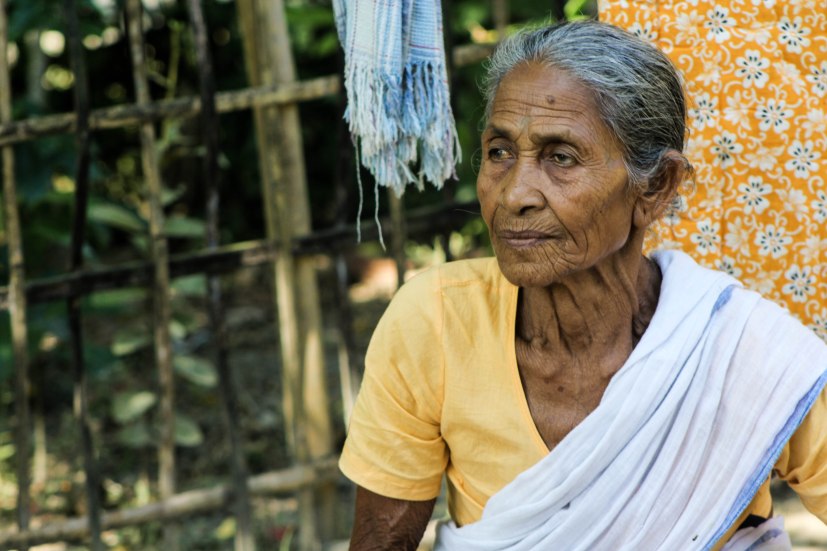
(My paternal grandmother)
Part II – Maternal Lineage
My mother was born to a son with an Anglo-Indian father and a Naagvanshi Munda woman (Jharkhand). Her father had an English father and an Odia mother.
They were among the English-men who had settled in India during the British rule.
Part III – The Roman Catholic Church
Though my dad’s ancestors were Adivasi Priests, he was born into a Roman Catholic family. Are you wondering how? It’s simple. My paternal granddad was baptized into the Roman Catholic Church at his own will. So, both my paternal grandparents and my paternal uncles/aunties are Catholics. They do, however, respect the traditions of the Kharias.
My mother was also born into a Roman Catholic family, although initially, my granddad was Anglican.
Part IV – “Isn’t ‘Kerketta’ a surname from Jharkhand?”
Yes, Kerketta is a common surname in states like Jharkhand and Chhattisgarh. Kharias in Assam were originally from these states. But during the British rule, many Adivasis migrated from these states for various reasons. Some came for jobs whereas others liked the ambience in Assam and got settled.
Part V – Conclusion
Now you know my lineage. But that isn’t all I told you. I told you about Adivasi groups and their traditions. Permit me to say, if we were primitive, we wouldn’t be getting straight A’s in class at a recognized and formal Educational Institute, in an unbiased setting. I also informed you about the Adivasi who have migrated to a different state. You have also been narrated about how the Adivasi have been absorbed into the Roman Catholic Church. I have also mentioned briefly about Anglo-Indians.
But who am I in the end? I am an Indian who was born into a Roman Catholic family. We are a country of beautiful lineages and exquisite diversities. But then, why do we discriminate?
History decides our heritage, but not what we want to leave behind. Hence, even though I am proud (not arrogant) of my lineage, I identify myself with what I can do now in order to leave behind a heritage for not just my succeeding generations, but for all future generations of the world.
 usic, you can learn musical notation, key terms and concepts. If you are a guitarist, you can learn sweep picking, finger-style guitar, shredding and could even memorize the fret-board.
 Ishan Savio