For millennia, humanity has been guided by prophets and teachers who preached love, humility, and unity. Yet, the world remains divided by ego, power, and belief. This essay explores why, despite the wisdom of our religions, we continue to repeat the same moral and spiritual mistakes and what it means for our collective evolution.
Across the centuries, prophets, sages, and teachers have appeared to remind humankind of the same simple truths: love one another, live with compassion, and seek the divine within. Yet, despite the wisdom handed down through every religion, civilization continues to struggle with the same divisions: of race, creed, class, and power. The question is not whether we were taught the truth, but why we still fail to live it.
At the heart of this failure lies human attachment: to identity, tradition, and power. We cling to what feels familiar, even when it confines us. Religion, born as a bridge between humanity and the divine, often becomes a fortress of exclusion. Traditions meant to preserve meaning turn into cages that protect comfort and resist change. Over time, the message of unity transforms into the machinery of hierarchy, and the symbols of truth become tools of control.
This paradox is not divine in origin; it is human. The same instinct that once kept our ancestors safe in tribes now fuels our spiritual narrowness. We fear what is different, mistaking difference for danger. We build walls of belief around ourselves and call them sacred, not realizing that truth was never meant to be owned, only discovered.
The great reformers of history all sought to break these walls. Each called humanity to return to essence: humility over pride, understanding over dogma, compassion over control. Yet, the cycle repeats, for institutions have a life of their own, and the ego finds new ways to survive, even in the language of holiness.
Perhaps the deeper lesson is that humanity is still growing; intellectually advanced but spiritually young. We know how to build empires, but not how to build understanding. We master the language of God, but not the silence where God speaks.
True religion, then, is not a set of traditions, but a movement toward awakening; a journey from the self that clings to the self that lets go. The day we see faith not as a boundary but as a bridge, humanity will have finally learned what it has been taught for millennia: that the divine was never divided; only our hearts were.
With honor and gratitude, I am pleased to share memories of the 5 glorious years I had spent at St. Joseph’s University (Bengaluru) and how it shaped me through education, outreach, and values to set and achieve high goals, as the Jesuit philosophy goes, “magis” or “the more.”
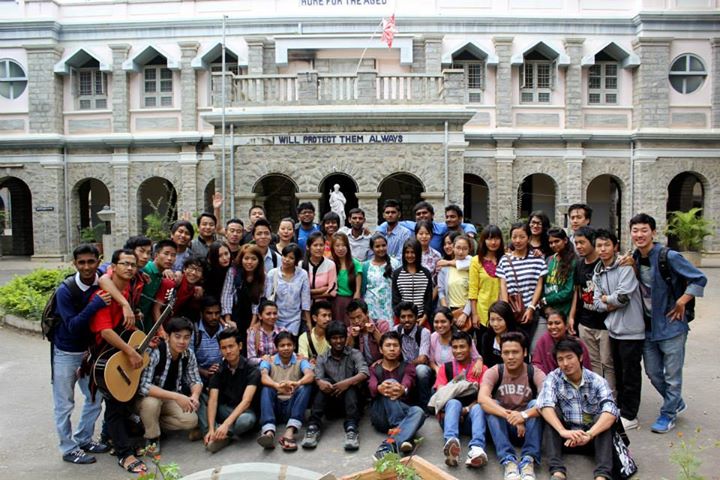
It was in 2012 that I joined St. Joseph’s University (then St. Joseph’s Autonomous College), in the Humanities section for BA Economics, Political Science and Sociology. Each semester at Joseph’s helped me grow as a student and as a person. SJU has always had students from all parts of the country and even other countries who actively participated in all academic, sports as well as cultural events. This provided an inclusive environment and a space to know and understand the situations, cultures and perceptions of students and the conditions of their home state or country. SJU also had specially-abled students and I have had conversations with quite a few of them.
The professors at SJU have always been quite approachable and always ready to help students, not only in their academic progress but also in personal development. I’m glad to have had the guidance and mentoring of all the professors of humanities, even if I wasn’t in their class. I am glad that I was continuously mentored by Prof Clement D’Souza and Prof Jerome Nirmalraj who have shaped my moral and work ethics to a great extent. I am glad to have studied Sociology through classes by Prof Berin Lukas. Although I History was not a subject in my BA course, it was always a pleasure talking to Fr Clarence D’Souza who was also the Administrator back then. Prof Latha Radhakrishnan was another Professor I will remember for the clarity of her lectures. Prof Somaiah’s helped clarify political concepts and public administrative structures well. Prof Anuplal was also quite supportive even though I didn’t have Industrial Relations as a subject.
I was also quite fond of the English Department as I have a close connection to books and literature, although my professional interests have always leaned towards Economics. I truly enjoyed classes by Prof Etienne, Prof Jyotsna, Prof Namrata, and the conversations with Late Prof Padma. There were many other Professors in other departments like Prof Kiran Jeevan in Social Work, Prof Johnson Rajkumar and Renee D’Souza, Melvin Colaco, Prof Bojamma, Prof Beatrice Siqueira and others with whom I had the pleasure to talk to and even learn from.
I was a part of both academic and cultural associations at SJU. As Vice President of Social Zest, it was great to work with Prof Anita Noronha and Prof Maria David. I was also closely involved in the Political Science Association as a core committee member, under the guidance of Prof Jerome. I also had the pleasure of editing ‘Echoes,’ the annual publication by NETSF. I was also a part of the college choir and I made many friends from the Science section of SJU through the choir. I was a part of both CSA and AICUF, but for limited time. Apart from associations, I was also a student member of IQAC and a student editor of the College Yearbook. SJU’s fests were
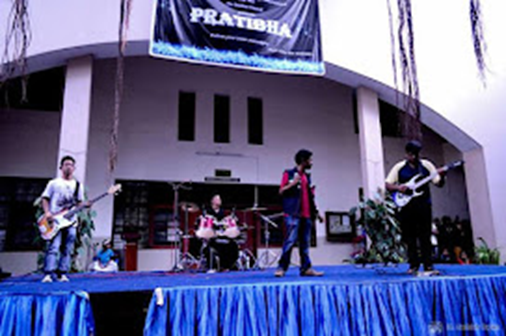
always something to look forward to, like Visages, Exodus, and Footprints. It was a time to participate, perform, enjoy, compete, make friends, appreciate, and learn. The fests also gave me enough occasions to click photographs and it helped me improve my photography skills. As I was also a musician, I had many opportunities to perform in various events in college. Sports Day was fun too. I used to sketch portraits and one room in the Humanities Block was reserved for an art exhibition on Sports days. So, I had put up my sketches there.
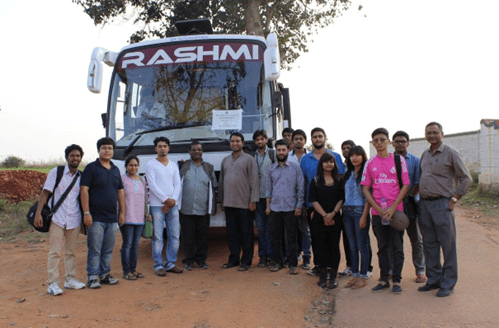
The college (now University) also offered several opportunities to travel to different places in Karnataka for personal development as well as social outreach. I had gone to Mangalore through SJU to attend a ‘Soft Skills for Employability’ workshop and to Mysore to attend a Leadership camp. The venue for AICUF’s State meet was also in Mangalore back then and I had got an opportunity to be a part of it though the association. Our class had also gone to Yercaud in Tamil Nadu for a Sociology study trip related to social research and Raichur district for Bembala outreach. The Political Science Association, Spectrum, had arranged a visit to Navadarshanam, an Eco farm. The Economics forum had arranged a trip to Chennapatna toy factory and Heritage Winery, which I was a part of. SJC also offered many certificate courses. I had signed up for Legal Literacy and it has proved to be useful even today.
I ‘crossed the street’ to continue my education at St. Joseph’s University in MA Economics. Although it was an intense course, as students we had moments to have our share of fun and relaxation amidst our studies and academic discussions. I am truly grateful to the PG faculty during my days there, including Prof Subhashini, Prof Manojit, Prof Anirban, and others. I also had close friends in the Mass Communication and English Departments and talking to them was a good break from the regular lectures. Sometimes learning something different as a hobby is relaxing. So, when I spoke to friends from other departments, I did learn a thing or two from them about their area of expertise and that was not only helpful but a healthy diversion from the intensity of lectures. I also participated in an idea pitching competition at the Changemaker Week 2016 event organised by Ashoka India, a network of social entrepreneurs, bagging the First Prize.
While pursuing my master’s degree, I got an opportunity to intern at NIAS and then another opportunity to intern at IGIDR. I chose the latter eventually, which helped me in a great way. I gained practical experience to work with large datasets not only during the internship, but also while preparing my dissertation. After graduating from St Joseph’s College, this time for MA Economics, studied Data Science from International Institute of Information Technology in Bangalore via upGrad and started working as a data science consultant at Quantzig. The very next year, the COVID-19 pandemic had its first wave. I quit and went back to my home town, taking a break from my regular career and instead learning, teaching economics to school students and taking guitar lessons for children.
Soon the danger levels of the pandemic started to decrease and companies started to hire again. I applied and got into PricewaterhouseCoopers India as a Senior Analyst. I was in the Economics and Public Policy team of the Economic Advisory Services competency. I am grateful to St. Joseph’s College (now a University) for imbibing in me the values, ethics and giving me ample opportunities to learn and teaching me to always keep learning. The virtues of ‘faith and toil’ continue to guide me in my work as move from one ambition to the next.
Over the years, I have realised that one can learn a lot even from a grain of sand. There are a few realisations that I have penned down:
1. Conquer with love, not with authority. It’s good to be a survivor only if you have something to get back to.
2. Humility, dedication and passion is the passenger ticket to a rocket to your goals.
3. People fight for you, Against you Or over you. That is the price of popularity.
4. It takes great courage to defeat one’s own ego and remain human.
5. Take something that annoys you and learn something useful from it.
6. Do good. Be good. Get good.
7. Personalize your life.
8. Pay attention to detail, but do not let lost in it.
9. When you write a song, write the words your heart is shouting out to you for attention.
10. A Leader is a person who raises everyone with him/her as he/she rises.
11. Be a message, not a messenger.
12. Let’s learn from nature. Nothing’s perfect, but everything is in equilibrium.
13. Restrictions kill Creativity.
14. Failures don’t matter if you start moving your focus towards success.
15. Don’t do anything for the sake of doing it. Do it only if it’s relevant.
16. Be proud enough to have standards, humble enough to learn.
17. Save your seconds. (time)
18. Don’t belong to anything. Let things belong to you.
19. Meet the expectations you have from yourself and everything else will follow.
20. Live like a poor person. Think like a rich person. The mindset is what leads you to do great things.
21. Time is movement. Keep moving.
22. Nothing is big enough for arrogance. Nothing is small enough for gratitude.
23. We often do things that we wouldn’t normally do when we are at the peak of emotion – excited, enraged, sorrowed. Strangely, it is the things we do at these moments that make the most memorable differences in our lives.
25. The greatest enemy of anything good, to become great, is lack of patience.
26. If someone wrongs you, do not wrong them back. Move on and focus on your goals. Achieve such a pedestal in life that their wrong would become insignificant.
27. Never reveal your plans before they have been materialised.
28. Don’t chase money. Do what you love, put your heart and soul into it. Money will chase you.
29. As long as you are humble, you will always keep learning. Learning more will increase your ability to grow in all spheres.
30. Whoever thinks money is wealth is already poor.
31. The only things that are good or bad are intentions and outcomes. Whatever happens in between is irrelevant.
32. You don’t get gold on the earth surface. You gotta dig deep. If you judge a person too quickly, you not know what they are worth.
33. If you want to be friends with two people who are enemies, you will ultimately lose both.
34. There are only two realities where matter exists – Time and space. Everything else is either spiritual or fiction.
35. Fight against adversities, not adversaries.
36. We are all part of the same species, some of us are from the same bloodline and even maybe the same family. What unites or separates us is who we choose to be from within.
37. When others look up at you for inspiration, every breath becomes a resonsibility.
38. Telling people what they want to hear might make you popular, but won’t get you any real friends.
39. Then fate said, “I have no past. present or future. But all pas, present and future depends on me.
40. Is a career just something to fill our pockets? Can’t it be a seamless, flawless journey?
41. Presence in the present is more important than presents.
Since a couple of weeks, I had been getting suspicious posts from my friend’s social media account. I knew that her account had been hacked. The fraudster was using her identity and her account to convince people that she was winning lotteries and giveaway money and dupe their targets of money and also taking control of their social media handles. Today, the fraudster tried to make me their target.
They sent me the infamous “Guess the number and win” 40K photo. (Money giveaway fraud)
So I decided to play along. I guessed the number and asked the person on the other side to pay up. The fraudster congratulated me and said that I had won giveway money and asked me how I wanted to intiate the transfer. I told them that they could transfer via UPI. The fraudster ask me to do something first, which was quite expected. They asked me to change the email address associated with the social media account. For those who don’t know, doing this can give complete ownership of your social media account to the unethical hacker/fraudster. They asked me to do it and share a screenshot.
So, of course I didn’t do it. But, I did share a fake screenshot using simple free pre-installed tools on a computer/laptop. The conversation went like so, although the hacker deleted many of their messages once the conversation was over.
They had also provided me fake screenshot messages showing that people had received the money, which they deleted. It was time to end the conversation.
The hacker has committed identity theft and financial fraud and probably continues to do so. I knew they wouldn’t pay by regular channels because if they did, it would disclose information about the hacker. I confirmed with my friend over the phone if her account was really hacked over the phone and reported the account. Later, the hacker blocked me.
Anyone can be a victim of Cyberfraud, no matter the education. Even doctors and layers have been victims of cyberfraud. Here are a few things you can do to keep yourself and your friends safe:
Stay alert.
Change passwords regularly and keep them strong.
Read/Watch updates on cybersecurity from time to time, to know about the new methods the fraudsters use.
If it is an email, always check the email address.
Do not click on any suspicious links or pop-ups on emails or the web.
Always use Two-Factor aunthentication for your accounts.
Never share OTP or PIN numbers.
Help a friend out. Report accounts that are hacked and do so in large numbers with attachements/screenshots if you have any.
Reach out to the Support team of the social media app or website.
File a report to the Cybercrime Cell of your country.
This is a question the young ‘eligible’ unmarried adults get asked once they cross a ‘certain’ age (at least in India). This question has been around for generations and never seems to get old. Most times they’re awkward, maybe sometimes they leave the young adults in abashment. Although they could often be annoying, with an evident unsolicited match-making intent.
Although the definition of marriage has remained the same, its meaning over time has changed. In the Indian context for example, categorizing marriages are ‘love marriage’ or ‘arranged marriage’ seems like a narrow perception if we go by the definition and history of love marriages and arranged marriages in India. An arranged marriage follows a process of marriage where there is match-matching by relatives, friends, acquaintances of the parents of the groom/bride, matrimonial guides, sites or priests. After the bride and groom meet, there is a courtship period. In the case of Hindus, horoscopes (and caste) are matched and considered crucial. Love marriages are ones where two consenting adults fall in ‘love’ and decide to get married.
Although the concept of a ‘love’ marriage seems pretty straight-forward, historically it was looked down upon in India and in some cases not allowed by the family and even considered dishonourable. This still exists in some regions of India. Eloping became common in love marriages at a point of time.
But what is marriage without love? Yes, one can fall with their spouse after marriage. Yes, couple united by ‘love marriages’ get separated too. The reverse is true as well, where love marriages last forever and arranged marriages break, even if they don’t on paper. Divorces weren’t prevalent in India. A marriage was considered sacred and still is. Divorces have been rising lately though, not because it is a legal agreement. But because of various genuine reasons as well.
Returning to the question of “When are you getting married,” there are many underlying aspects related to the decision behind this response, if one chooses to respond honestly that is. The most common honest response could be, “I don’t know” or “I’m not sure.” Marriage is a union. Yes, it is a union of two families. But most importantly it is the union of two individual souls who decide to become one, through constant companionship, surrendering and love. It is a promise of mutual strengthing and support.
So each person needs time and space to introspect on the aspects related to the decision of marriage. Personal mental and financial confidance is extremely relevant before saying “I do” for another. One’s career and one’s understanding should align and/or compliment with the future spouse’s ambitions for a sucessful marriage. Most importantly, one must be able and willing to submit themselves completely to the union of marriage through independently conscious, mutual consent.
Today, young adults including myself, are faced with a plethora of realities, experiences (probably not long, but profound) and global cultures and tradition. The meaning of ‘love’ too keeps getting redefined, learned, unlearned an re-learned. There are women whom men are attracted to but have no emotion for. There is also the case where they love a woman like no one else and maybe even find attractive but not in a sexual way. There could also be women who give their heart and soul to a person they believe is their soulmate. But then again, broken hearts of women could sometimes even be blinded by the wounds of past hurt that they can even believe that a virtuous man is in fact approaching them only to take advantage of them. It isn’t the fault of anyone. We can’t read minds, can we?
They say marriages are made in heaven, but there are everyday humans who aren’t legally allowed to get married in some countries despite living a life filled with love and companionship despite countless hardships. #pride
Now when I think about the quesion of “When are you getting married?” … I think, are they ready for the response? Can they understand the underlying realities associated with that question? In a world of changing realities, uncertain economies and information explosions that affect and form our minds; in a time of growing anxieties from tasks that shouldn’t naturally cause such, it is not always a simple answer. It sure is never easy. To understand the language of the heart, ones needs to listen to the heart amidst the noise of the new conditions of life we live in.
Q: “When are you getting married?” A: Fate will lead me to mutual love. Mutual love will lead me to marriage. All else will abide by this fate.
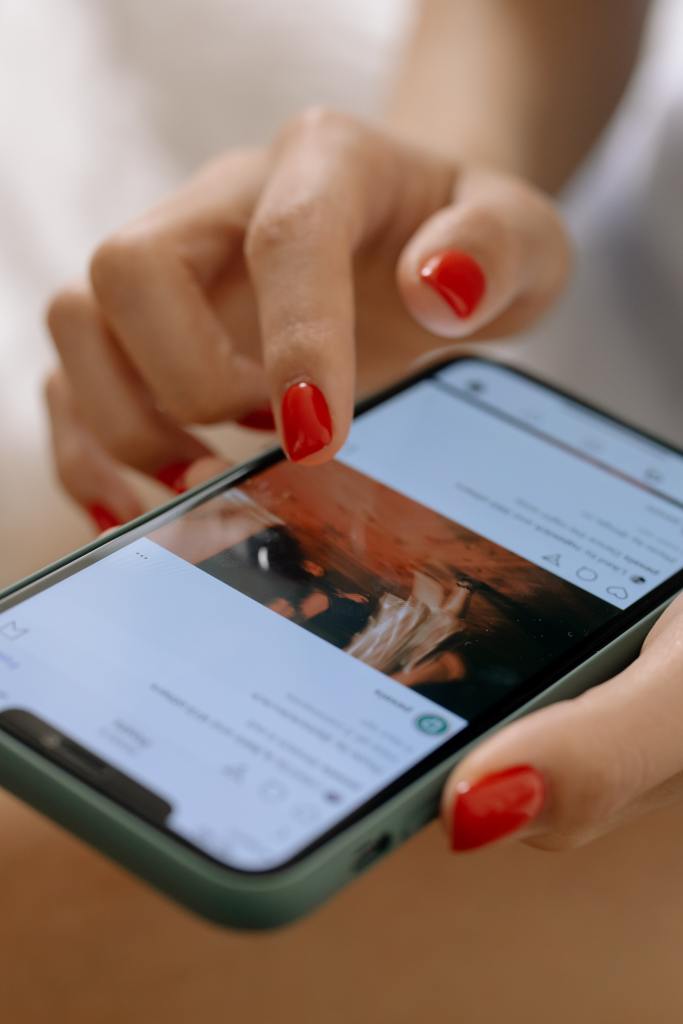
We live in a time where we can see what everyone is upto through pictures, stories or reels on Facebook or Instagram. We live in a time where we can join a live podcast and even possibly participate in it. Whether we are making more connections there or are we getting over our insecurities of talking out loud is a different story.
What is clear though is that although it is building with our network or helping us keep in touch with our contacts (although being a good advantage) is that social media is changing the definition of being social. Teenagers these days keep scrolling through their Insta feeds for hours, looking at what celebrities and influencers post there. They are even busy turning everything into a reel as if restricting creativity to a game of making the best reels.
Photo by cottonbro
Sure, we are communicating. But is all this truly making us social in the actual sense? Actual friendships; the ones where you sit with each other and laugh, the ones where you go on trips, the ones where you hang out at the coffee house or at the pub on weekends and especially the ones where you can depend on each other in times of need; are fading especially when there is nothing like school or college binding us. We are getting distant. I mean, it’s natural for most old friendships to grow weaker over a long period of time. We can’t actually stay in touch with all of them. But we do need to make a choice to either stay in touch with our closest friends or make new friends for a healthy social life.
Photo by Helena Lopes
Being social in the active form like meeting friends, hanging out and so on rather than a passive from like connecting through social media is also better for mental health as it is more engaging. Unnecessary misunderstandings are also avoided as all communication is face to face. Physicially being present while communicating also helps us overcome our insecurities better, especially with a casual and friendly crowd.
It is okay to have an updated Facebook profile or use Instagram. But if you think it is going to compensate for an active social life, that would be a huge mistake and as human beings, it is necessary to have and enjoy a healthy social life.
A for Adorable
B for Beautiful
C for Charismatic
D for Debonair
E for Empathy
F for Friendship
G for God
H for Happiness
I for Intellect
J for Jokes
K for Kindness
L for Love
M for Mother
N for Nature
O for Outstanding
P for Playful
Q for Quest
R for River
S for Sea
T for Talent
U for Understanding
V for Vogue
W for Wisdom
X for Xylophone
Y for Yesterday
Z for Zebra
When a business tries to study its customers, they often assume that consumers are impacted by similar driving agents that make them decide on buying one product over the other. Convenience, comfort, trust, packaging, brand, quality, quantity, features; these agents and others, depending on the field of product and the type of market associated with it. We go with the convention that consumers will make rational decisions and hence, their decisions can be predicted if we adhere to these the needs of these driving agents. But haven’t we observed an entire generation stop watching television for lack of on-demand entertainment without ads?
Of course, OTTs like Netflix, Hotstar and Amazon Prime (powered by the Internet) have curbed the rise in demand for entertainment in this regard, pretty quickly. Clearly, the ingestion of OTTs did not increase the use of cable TV or even digital TV. Possibly, it might have reduced it further. What OTTs did, was satisfy the consumers’ demand and that’s what my focus is on. Now, this was pretty straight-forward. People had more things to do, so they wanted to spend less time doing things irrelevant to them.
There are other reasons why people prefer one product over the other. Customers often purchase commodities that they can relate to. This statement does not hold for necessary commodities. But it is highly relevant for luxury commodities. This might lead them to buy 10 units of the same material over time, though another product in comparison has better technical features.
The diversity of consumers’ needs are growing exponentially over time. We can no longer stick to a model still ignores the outliers. I feel, today, we have the resources and technology to work towards including these ‘outliers’ into our framework. We can now actually capture these small, but highly relevant natures of market behaviour.
The answer to these questions is the union of Behavioral Economics (BE) and Data Science (DS). Behavioural Economics studies the impact of psychological, emotional and social factors among others on economic decisions. Data Science is the ambit of anything that can be achieved using data; be it problem-solving, decision-making, predictive analytics or artificial intelligence. Use of DS tools can be used to observe the social trend of upcoming generations and detecting a possible drop in demand for a product that otherwise could have never been observed. Research in this area would also improve the predictability of a commodity going out-of-fashion.
Consent-based psychological and social experiments can be conducted by researchers and data can be collected for different locations and strata. These experiments should be carefully developed in a way that it requires an action-based response, rather than a verbal response (So that we do not mistake intent with action). All this data can be compiled and new social groups can be discovered (using clustering techniques) with completely different buying intentions or product mix preferences. There can be studies done to quantify the intensity that can be given to how much a person/group can be influenced (regression techniques). For example, usually, a person who answers ‘Maybe’ on a question is more likely to be influenced and change their opinion after a conversation compared to a person who chose ‘Yes’ or ‘No.’
Who would gain?
Businesses, Investors, Economists, Data Scientists and Consumers!
Businesses would gain as they will be able to make better decisions. Investors would gain as businesses would do well and they’d make greater profits. Economists and data scientists would gain as they’d be able to explore greater areas in their field of expertise. Consumers will gain because businesses would produce as per their needs – both constant and evolving.
I was always good at computers and spent a lot of time on it since I was a child. Despite having this keen interest, I went into the Commerce stream in Senior Secondary School and later got a Bachelor’s degree with Economics as one of the majors and a Master’s degree in Economics. I was happy that I studied Economics but the child in me had some dreams unfulfilled.
During my Master’s degree program, I had a knack for mathematical and statistical methods. Econometrics was however, a little challenging. As a requirement of the program, I had to complete a compulsory internship after the second semester. The professors at St. Joseph’s College (Bengaluru, India) were very helpful and approachable. One of my professors in the Economics department shared an internship opening at a development research institute named Indira Gandhi Institute of Development Research (IGIDR), Mumbai. I applied and was selected. It is during this internship that I got a hands-on experience with datasets. (I had learnt some basics using SPSS before but this was more intense.) These were large national datasets. I was assisting a professor at IGIDR on his empirical research related to the Industry sector, with intensive use of Excel and Stata. Later in my Master’s degree program I was also required to complete a Dissertation, the area of which I chose as Behavioural Economics. During this Dissertation, I learnt a lot about research methods like review of literature, data collection, Econometric methods to analyse data and interpretation of that analysis in the context of Economics.
Over time, I realized that I really liked working with datasets and had a knack for problem-solving. I wanted a career in which I could work with data and maybe also where my knowledge of Economics could be useful. Around this time, the demand for data scientists and data analysts in India were on the rise. There were articles written about it often and advertisements of several courses offered by different institutes and educational websites flooded the internet.
So, I did a little research and found that getting into data science required a good understanding of computer programming logic and a certain level of ease dealing with Statistics. Both the child in me and the adult me were happy to finally find something that could connect both. I joined a Post Graduate Diploma program offered by upGrad in association with the International Institute of Information Technology, Bangalore. The program was offered online, it was well-structured, included live sessions, regular assignments (both individual and group), had an exclusive discussion forum, had assigned student mentors and Career support. It was a complete package for getting into a Data Science career.
The course focused mostly on R as the language used for explanations and assignments but they did have additional optional modules on Python too. As I progressed in the course, my affinity towards programming logic and knowledge of Statistics and Econometrics helped a lot. In fact, many concepts like Inferential Statistics, Hypothesis testing, Linear Regression, Time Series and Data Sourcing were quite familiar. Even though I had a good understanding of programming logic, I didn’t really code much before apart from some basic programming languages, C/C++ in high school and in a paper on HTML in college. But even this meagre knowledge helped me to learn and work on R and code naturally. Overall, the difficulty level of the Data Science program was moderate for me – familiarity of Statistical Concepts and unfamiliarity of programming experience.
I believe the domain knowledge of Economics will also be really useful as I step into my Career in Data Science. That’s a story I’d love to tell someday. Right now, I’ll just be learning as much as I can for this well-tailored profession I am getting into. To all the Economics grads out there, consider looking into data science as a Career option. It feels like one of the practical applications of what we learn in Economics.
Duration and timing are two relative concepts. Often, Duration seems disregarded in our daily life by some, while given too much importance by others. Timing, however, has a whole different purpose.
Duration is a restrictive concept. There is no accurate measure of “How much time will I need to do this?” Of course, one can measure how they performed last time and assume that the time required to do that particular work is, say 30 minutes.
However, I say that doing this will hinder any possibilities for improvement. Instead, one can look at the time as a reference rather than a measure.
For example,
Case I (Duration):
I need to write an article of 1500 words. If I try to guess how much Time it requires, I would have many obstacles in completing the work. I would keep looking at my watch to see how much Time is left according to what I had measured. I would keep getting worried about the lack of Time and become impatient. I will start doubting my speed of doing work and eventually get demoralized.
Case II (Duration):
Now let’s look at this situation another way. I need to write an article of 1500 words. I look at my watch and see that it’s 9:01 PM. I keep my watch aside, remember why I am writing the article and where it will get me. After that, I write the essay and enjoy every aspect of it – the theme, the writing… anything related to the article directly or indirectly… I choose to get engrossed in it.
You would find that in Case II, you would have finished writing the first draft of the article in 10-15 mins and the final selection after grammar checks, sentence framing, etc. in 20-25 mins whereas in Case I you might not even finish the first draft in 30 minutes.
That is why I say that Duration is a restrictive concept.
However, Timing is not a restrictive concept. Let me explain this differently.
When you suddenly get a fantastic Idea, you will be overwhelmed, and either of the following could happen:
Case I (Timing): You will execute it immediately
If you execute it immediately, you will be satisfied that you quenched your excitement. But gradually, you will realize that there are many loopholes in the execution of that Idea. If you persist, the gaps will become visible by others, and the impact of your Idea will be minimal.
Case II (Timing): You will not execute it immediately but plan to do it later
If you do not execute it immediately, you can build on the Idea. You now have the chance to think about it each day, research on queries/gaps that arise, add possible things that could make its execution ever better and give a gap period before executing it. You can also plan to implement the Idea at a time when it will reap maximum benefits. That’s Timing.
Case II has higher possibilities of success as the Idea has been scrutinized well. The impact will be much more substantial. The effect will also be even stronger if the execution is timed well. It is as simple as investing in more ingredients for food recipes when the Annual Food Fest is near.
Hence I say Duration may not be as crucial as Timing is. Still, Time is of inevitable relevance for reference.









 Ishan Savio